
Introduction
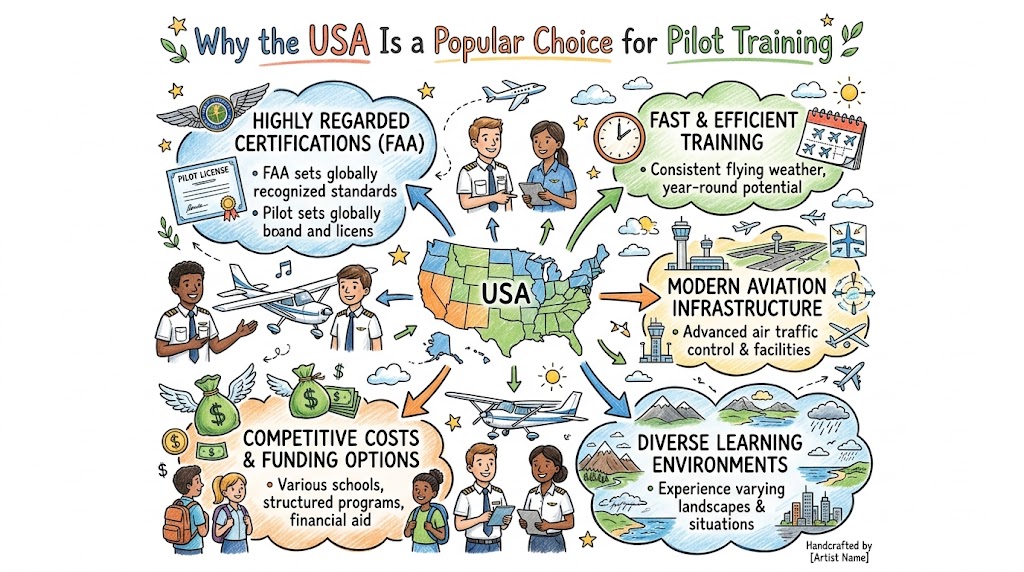
The United States has long been recognized as one of the premier destinations for pilot training. Aspiring pilots from around the world choose the USA because of its advanced aviation infrastructure, FAA-recognized certifications, experienced instructors, modern aircraft fleets, and strong career opportunities. For both international and domestic students, training in the USA provides access to a structured and globally respected system that prepares pilots for a wide variety of aviation careers.
The popularity of pilot training in the USA is not just about technical instruction. Students benefit from diverse weather conditions, varied airspace environments, efficient flight hour building, and exposure to commercial and general aviation operations. These factors help students gain practical experience, confidence, and the skills required to succeed in highly competitive aviation careers. Whether pursuing a private pilot license, commercial license, instrument rating, or airline transport certification, the USA offers a comprehensive training environment that combines quality, safety, and opportunity.
Real-World Use Cases
Training in the USA offers tangible benefits for aviation students:
- International students earn FAA-recognized licenses that are respected worldwide.
- Aspiring airline pilots build skills aligned with commercial airline standards.
- Student pilots gain hands-on experience in diverse flight conditions.
- Flight instructors develop teaching expertise within FAA-approved programs.
- Commercial pilot candidates accumulate flight hours efficiently.
- Recreational pilots pursue personal aviation goals with accessible infrastructure.
- Career changers enter the aviation industry with recognized credentials.
- Multi-city flight experience enhances decision-making and operational proficiency.
- Flight schools with cadet programs connect students to airline pathways.
- Students benefit from networking with peers from around the world.
Evaluation Criteria for Students
Before choosing a flight school in the USA, students should consider the following:
- FAA certification and school approvals
- Instructor experience and training quality
- Aircraft fleet condition and availability
- Simulator technology and training support
- Flight hour building opportunities
- Weather conditions and flight frequency
- Safety standards and operational procedures
- Student accommodation and support services
- Airport and airspace training environment
- Career placement and airline pathways
- Total training costs and financing options
- Reputation and graduate success rates
Best for
This guide is best suited for international aviation students, aspiring commercial pilots, student pilots, airline cadets, and aviation career seekers who are seeking structured, globally recognized pilot training opportunities.
Not Ideal for
This guide is not ideal for students unwilling to relocate, those seeking only low-cost local flight lessons, or pilots wanting training exclusively in non-FAA jurisdictions. Training in the USA requires planning for relocation, costs, and adherence to FAA regulations.
Why the USA Is a Leading Destination for Pilot Training
1- FAA-Recognized Pilot Certification
FAA licenses are internationally respected and provide a pathway to careers in both commercial and general aviation worldwide. Graduates of FAA-approved programs often have simplified licensing conversion in other countries.
2- Modern Flight Schools and Aviation Infrastructure
The USA offers advanced flight academies, simulators, modern aircraft fleets, and training facilities. Students gain exposure to high-quality aviation operations and standards.
3- Experienced Flight Instructors
Certified instructors guide students through technical training, flight safety protocols, and operational skills, providing mentorship essential for confidence and professional development.
4- Diverse Weather and Airspace Experience
Students train in different weather conditions, controlled and uncontrolled airspace, and complex flight environments, enhancing adaptability and practical flight skills.
5- Access to Modern Training Aircraft
Training aircraft range from single-engine trainers to multi-engine and glass cockpit aircraft, allowing students to gain hands-on experience aligned with industry standards.
6- Advanced Flight Simulation Technology
Simulators enable emergency procedure training, instrument flying, and complex scenarios safely, improving decision-making and preparation.
7- Efficient Flight Hour Building
Favorable weather, active airspace, and available flying opportunities help students accumulate required flight hours efficiently, reducing training duration.
8- Strong Aviation Career Opportunities
With airline partnerships, cadet programs, and pilot demand, graduates have enhanced employment prospects and clear pathways to commercial aviation careers.
9- Flexible Training Programs
Students can pursue private pilot, commercial pilot, instrument rating, multi-engine, ATP, and flight instructor programs tailored to career goals.
10- Global Student Community
Training alongside international students offers exposure to diverse aviation practices, cultural exchange, and global networking opportunities.
Comparison Table: Pilot Training in the USA vs Other Regions
| Feature | Pilot Training in the USA | Training in Other Regions | Student Benefit |
|---|---|---|---|
| Certification | FAA-approved | Varies by country | Globally recognized licenses |
| Weather | Diverse, year-round flying | May be limited seasonally | Efficient flight hour building |
| Airspace | Controlled & complex | Often limited | Experience in varied environments |
| Aircraft Access | Modern training fleets | Limited or older fleets | Hands-on experience with advanced aircraft |
| Career Pathways | Airline partnerships & cadets | Limited options | Strong employment prospects |
| Infrastructure | Advanced simulators & facilities | May lack modern simulators | Better preparation for exams & real-world operations |
| Flight Hours | Efficient accumulation | May take longer | Time and cost efficiency |
Types of Pilot Training Programs Available
- Private Pilot License Training: Entry-level training for recreational and personal flying.
- Commercial Pilot Training: Prepares pilots for airline or charter operations.
- Instrument Rating Programs: Enables flying under instrument flight rules (IFR).
- Multi-Engine Training: Builds skills for more complex aircraft operations.
- Certified Flight Instructor Programs: Prepares pilots to teach and log student hours.
- Airline Transport Pilot Preparation: Advanced training for airline careers.
- Recreational Pilot Training: Simplified programs for hobbyist and sport flying.
- Fast-Track Airline Programs: Accelerated pathways for airline cadets.
Tips for Choosing the Right Pilot Training School
- Verify FAA approval and certification status
- Compare instructor experience and student-to-instructor ratio
- Review aircraft fleet quality and maintenance
- Visit training facilities if possible
- Understand total training costs, tuition, and living expenses
- Evaluate student support and accommodation services
- Ask about career pathways and airline partnerships
- Review simulator availability and technology
- Check graduate placement records and success rates
- Understand visa, relocation, and regulatory requirements for international students
Common Mistakes Students Should Avoid
- Choosing schools solely based on low pricing
- Ignoring instructor qualifications
- Not reviewing aircraft availability and condition
- Underestimating living and relocation costs
- Skipping simulator training opportunities
- Failing to plan long-term career goals
- Ignoring weather and airport environments
- Not verifying FAA approval or certifications
- Selecting schools with poor maintenance standards
- Delaying flight hour progression
Frequently Asked Questions
1. Why is the USA popular for pilot training?
The USA offers FAA-certified programs, modern aircraft fleets, experienced instructors, and diverse flying environments, making it a top choice for aspiring pilots worldwide.
2. Are FAA licenses recognized internationally?
Yes, FAA licenses are respected globally, and many countries allow simplified conversion for international employment.
3. How long does pilot training take in the USA?
Training duration varies by program but is often shorter due to efficient flight hour building, favorable weather, and high flying availability.
4. What types of aircraft are used in training?
Training aircraft include single-engine, multi-engine, and glass cockpit planes, along with advanced simulators.
5. Is pilot training in the USA expensive?
Costs vary, but training is an investment in high-quality education, FAA certification, and global career opportunities.
6. Can international students train in the USA?
Yes, international students can enroll in FAA-approved programs and obtain student visas for training.
7. What are the benefits of FAA certification?
FAA certification ensures global recognition, career opportunities, adherence to safety standards, and structured training.
8. Are simulators important in pilot training?
Simulators are essential for instrument flying, emergency scenarios, and advanced flight training, improving safety and skill development.
9. What career opportunities are available after training?
Graduates can pursue careers as airline pilots, charter operators, flight instructors, or corporate aviation professionals.
10. How should students choose the right flight school?
Evaluate FAA approval, instructor experience, aircraft quality, student support, career pathways, and training costs.
Conclusion
The USA remains one of the top destinations for pilot training due to its FAA-recognized certification system, modern flight schools, advanced aircraft fleets, experienced instructors, diverse airspace, and career opportunities. Students gain practical experience, global recognition, and strong career pathways, preparing them for commercial, private, and recreational aviation careers. For aspiring pilots seeking comprehensive training, safety, and long-term professional success, the USA offers unmatched resources, structured programs, and a supportive international aviation community.

