
Introduction
A Private Pilot License (PPL) is one of the most important milestones for anyone who wants to learn how to fly. It allows individuals to operate an aircraft independently for personal or recreational purposes. Many beginners are excited to start flying but often feel confused about what is actually required to earn this license.
The good news is that Private Pilot License requirements are structured in a step-by-step way, making it easier for students to progress from beginner to licensed pilot. These requirements are designed to ensure safety, skill development, and proper aviation knowledge before flying solo or operating an aircraft independently.
This guide explains all the key requirements in a simple and beginner-friendly way so aspiring pilots can understand what to expect before starting their training journey.
Real-world Use Cases
A beginner starting pilot training from zero experience uses PPL requirements to understand what steps are needed before flying solo.
A student preparing for their first solo flight follows structured training rules to build confidence and safety awareness.
A career changer entering aviation uses requirements as a roadmap to plan training and budgeting.
A student preparing for the FAA knowledge exam studies theoretical subjects like navigation, weather, and regulations.
A trainee practicing radio communication learns how to talk with air traffic control confidently.
A learner struggling with landings or navigation uses training milestones to improve gradually.
A parent researching aviation for their child uses requirements to understand the full learning process.
Evaluation Criteria for Private Pilot License Readiness
Before becoming eligible for a PPL, students must demonstrate readiness in:
- Age eligibility compliance
- Medical fitness certification
- Ground school knowledge completion
- Flight training progress
- Communication skills with ATC
- Aircraft handling ability
- Navigation and airspace understanding
- Weather interpretation skills
- Solo flight readiness
- Logbook accuracy and flight hours
- Decision-making ability
- Safety awareness
These criteria ensure a pilot is fully prepared for safe flight operations.
Minimum Age Requirement
To begin training, students must meet the minimum age requirement set by aviation authorities.
For example, younger students can start training early but must meet age requirements before licensing.
English Language Proficiency
Pilots must be able to communicate clearly in English for global aviation safety.
For example, understanding ATC instructions ensures safe navigation in controlled airspace.
Medical Fitness Requirements
A valid aviation medical certificate is required to ensure physical and mental fitness for flying.
For example, a pilot must be healthy enough to handle stress and decision-making in flight.
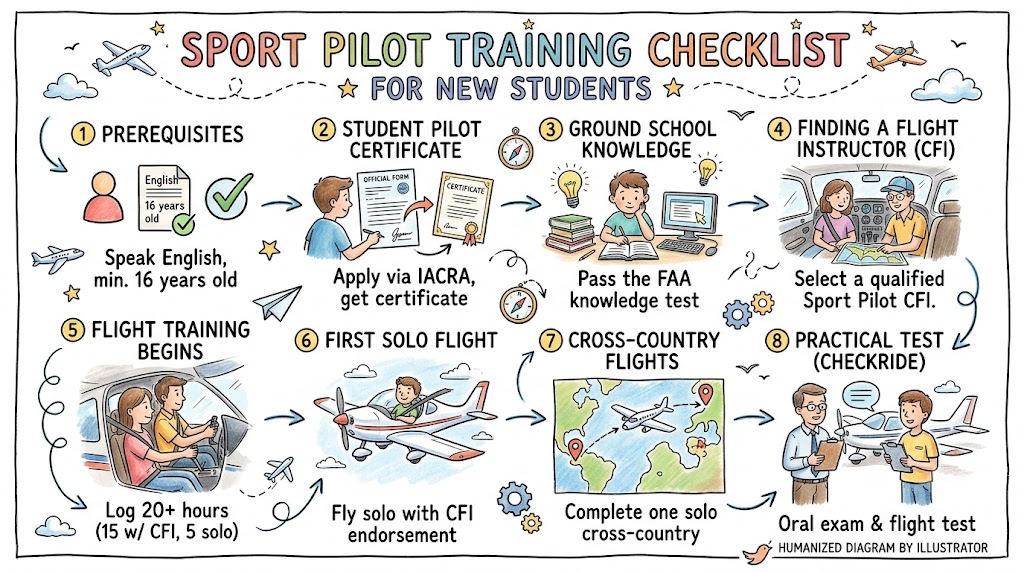
Student Pilot Certificate Eligibility
Before solo flying, students must obtain a student pilot certificate.
For example, this certificate allows supervised flight training under an instructor.
Ground School Training Requirements
Ground school teaches essential aviation theory.
For example, students learn navigation, aerodynamics, and weather basics before flying.
Flight Training Hours Requirement
Students must complete a required number of flight hours.
For example, consistent flying practice builds skill and confidence over time.
Dual Flight Training with Instructor
Initial training is done with a certified instructor.
For example, instructors guide students during takeoff, landing, and maneuvers.
Solo Flight Eligibility Rules
Before flying alone, students must demonstrate skill and safety readiness.
For example, a student must successfully perform supervised landings before solo approval.
Knowledge Exam (Theory Test)
Students must pass a written exam covering aviation knowledge.
For example, questions include weather patterns, navigation, and regulations.
Practical Flight Test (Checkride)
The final step is a flight test with an examiner.
For example, students must demonstrate safe flying skills and decision-making ability.
Airspace and Navigation Knowledge
Pilots must understand different types of airspace and navigation systems.
For example, knowing controlled vs uncontrolled airspace ensures safe flight planning.
Weather Interpretation Basics
Understanding weather is essential for safe flying decisions.
For example, pilots must avoid flying in unsafe weather conditions like storms.
Radio Communication Skills with ATC
Pilots must communicate clearly with air traffic control.
For example, using standard radio phrases ensures safe coordination with airports.
Logbook and Flight Record Maintenance
Students must track all flight hours and training progress.
For example, logbooks are reviewed before checkride eligibility.
Aircraft Handling Proficiency
Pilots must demonstrate control over aircraft in different conditions.
For example, smooth turns and stable flight paths show good handling skills.
Emergency Procedure Knowledge
Pilots must know how to respond to in-flight emergencies.
For example, practicing simulated engine failure improves safety readiness.
Cross-country Flight Training Requirement
Students must complete longer navigation flights.
For example, flying to another airport helps build real-world navigation experience.
Night Flying Requirements
Some training includes night flying exposure.
For example, pilots learn to rely on instruments and lighting at night.
Pre-flight Inspection Skills
Pilots must inspect aircraft before every flight.
For example, checking fuel levels and control surfaces ensures safety.
Decision-making and Situational Awareness
Good pilots make safe and timely decisions.
For example, avoiding bad weather shows strong judgment and awareness.
Student Pilot vs Licensed Private Pilot
| Factor | Student Pilot | Private Pilot |
|---|---|---|
| Experience | Learning stage | Independent flying |
| Responsibility | Instructor guided | Fully responsible |
| Skills | Basic | Advanced |
| Confidence | Developing | High |
Ground Training vs Flight Training
| Factor | Ground School | Flight Training |
| Focus | Theory | Practical flying |
| Learning Type | Academic | Hands-on |
| Purpose | Knowledge base | Skill development |
Dual Instruction vs Solo Flying
| Factor | Dual Instruction | Solo Flying |
| Supervision | Instructor present | Independent |
| Confidence | Building stage | Fully tested |
| Learning speed | Guided | Accelerated |
Beginner vs Checkride-Ready Stage
| Factor | Beginner | Checkride Ready |
| Skill level | Basic | Advanced |
| Knowledge | Limited | Complete |
| Independence | Low | High |
Benefits of Understanding PPL Requirements
Understanding requirements helps students:
- Plan training effectively
- Reduce confusion early
- Build confidence step by step
- Manage training costs
- Stay motivated
- Improve learning efficiency
- Avoid delays in certification
- Understand progression clearly
- Strengthen safety mindset
- Achieve license success faster
Practical Tips for Future Pilots
- Start ground school early
- Stay consistent with flight lessons
- Ask instructors questions often
- Track progress in logbook
- Focus on basics before advanced skills
- Practice radio communication regularly
- Stay calm during early mistakes
Common Mistakes to Avoid
- Ignoring ground school studies
- Skipping flight training sessions
- Poor logbook management
- Rushing through learning stages
- Underestimating weather knowledge
- Not following instructor feedback
FAQs
1. What is a Private Pilot License?
A Private Pilot License allows a person to fly an aircraft independently for personal or recreational use.
2. What is the minimum age for PPL?
The minimum age requirement varies but students must meet official aviation authority guidelines before licensing.
3. Do I need a medical certificate?
Yes, a valid medical certificate is required to ensure fitness for flying.
4. How many flight hours are required?
Students must complete a minimum number of flight hours as required by regulations.
5. What is ground school?
Ground school teaches aviation theory such as navigation, weather, and aircraft systems.
6. What is a checkride?
A checkride is a practical flight test conducted by an examiner to assess flying skills.
7. Can I fly solo during training?
Yes, but only after meeting instructor approval and safety requirements.
8. How long does PPL training take?
Training duration depends on consistency and student progress.
9. Is radio communication difficult?
It becomes easier with practice and repeated exposure during training.
10. What is the best way to prepare?
Stay consistent, follow instructions, and practice both theory and flying regularly.
Conclusion
Understanding Private Pilot License requirements is the first step toward becoming a confident and skilled pilot. These structured requirements guide students through every stage of training, from ground school to solo flights and final certification. By following each step carefully, beginners can build strong aviation knowledge, improve flying skills, and stay safe throughout their journey. With proper preparation and consistent practice, earning a Private Pilot License becomes a clear and achievable goal for any aspiring pilot.

