
Introduction
Becoming a commercial pilot is a dream for many aviation enthusiasts. The opportunity to fly professional aircraft, travel across destinations, and build a career in aviation attracts thousands of aspiring pilots every year.
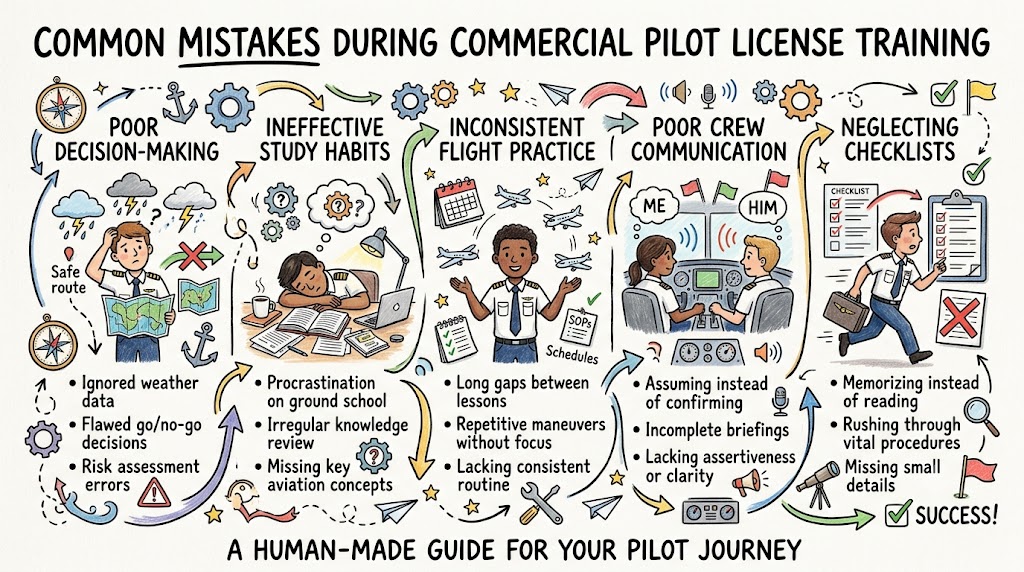
However, earning a Commercial Pilot License (CPL) is a demanding journey that requires much more than simply completing flight hours. Successful pilots must develop technical flying skills, strong aviation knowledge, professional discipline, and the ability to make safe decisions under different conditions.
Many student pilots begin their training with excitement and motivation, but some underestimate the level of preparation and commitment required. Small mistakes during training can affect progress, confidence, and overall learning outcomes.
Understanding these common mistakes allows aspiring pilots to prepare better and approach their training with the right mindset.
Commercial pilot training is not only about learning how to operate an aircraft. It is about developing the habits, knowledge, and professionalism required to become a responsible aviation professional.
Why Proper Preparation Matters in CPL Training
Commercial Pilot License training involves multiple stages, including:
- Ground school education
- Flight practice
- Navigation training
- Aircraft system learning
- Examination preparation
- Practical skill development
Each stage builds important abilities required for professional flying.
Students who prepare properly are more likely to:
- Understand aviation concepts better
- Improve flying confidence
- Develop stronger decision-making skills
- Progress efficiently through training
Without proper preparation, students may struggle with maintaining consistency, understanding complex topics, or applying knowledge during flight operations.
Common Mistakes During Commercial Pilot License Training
1. Choosing a Flight School Without Proper Research
One of the first important decisions for an aspiring pilot is selecting the right flight training school.
Many students focus only on cost or location and overlook other important factors.
A quality flight training environment should include:
- Experienced instructors
- Well-maintained training aircraft
- Strong safety culture
- Proper learning resources
- Student support systems
Choosing an unsuitable training environment can create challenges such as inconsistent instruction, limited aircraft availability, and slower progress.
Before joining a flight school, students should carefully evaluate the training approach, facilities, instructors, and overall learning environment.
2. Ignoring Aviation Theory Knowledge
A common mistake among some student pilots is focusing mainly on flying skills while neglecting theoretical knowledge.
Professional pilots require a strong understanding of aviation concepts because good decisions in the cockpit depend on knowledge.
Important areas include:
Aerodynamics
Understanding how aircraft operate helps pilots manage different flight situations effectively.
Meteorology
Weather knowledge helps pilots evaluate conditions and make safe flight decisions.
Navigation
Navigation skills are essential for planning and completing flights accurately.
Aircraft Systems
Understanding aircraft components helps pilots recognize system behavior and respond appropriately.
Aviation Regulations
Following aviation rules and procedures is a fundamental responsibility of every pilot.
Strong theoretical knowledge supports better practical flying skills.
3. Maintaining an Inconsistent Flight Schedule
Consistency is one of the most important factors in pilot training.
Flying skills improve through regular practice and repetition. Long gaps between lessons can make students lose confidence and require additional time to regain previous skills.
Inconsistent training may lead to:
- Slower skill development
- Reduced confidence
- Difficulty remembering procedures
- Increased training duration
Students should maintain a realistic and regular training schedule that allows continuous improvement.
4. Not Taking Instructor Feedback Seriously
Flight instructors play an important role in developing student pilots.
Experienced instructors identify:
- Technical weaknesses
- Safety concerns
- Areas needing improvement
- Incorrect habits
Some students make the mistake of ignoring corrections or becoming defensive about feedback.
Professional pilots understand that feedback is an essential part of growth.
Learning from instructor guidance helps students improve faster and develop safer flying habits.
5. Focusing Only on Passing Examinations
Passing aviation examinations is important, but CPL training is not only about achieving academic results.
A successful commercial pilot needs a combination of:
- Knowledge
- Practical flying skills
- Decision-making ability
- Safety awareness
- Professional attitude
Students who focus only on exams may struggle to apply knowledge during real flight situations.
The goal of training should be developing complete aviation capability, not just completing assessments.
6. Poor Time Management
Commercial pilot training requires balancing multiple responsibilities.
Students must manage:
- Flight lessons
- Ground classes
- Self-study
- Examination preparation
- Personal commitments
Poor time management can create unnecessary stress and affect learning progress.
Effective time management helps students stay organized and maintain steady improvement.
Successful pilots develop the habit of planning ahead and preparing consistently.
7. Underestimating Weather Knowledge
Weather is one of the most important factors in aviation decision-making.
A common mistake among beginner pilots is not giving enough importance to meteorology.
Pilots must understand:
- Weather patterns
- Forecast information
- Visibility conditions
- Wind factors
- Weather-related risks
Good weather knowledge helps pilots make responsible decisions and improve flight safety.
Professional pilots never underestimate changing weather conditions.
8. Neglecting Pre-Flight Preparation
Preparation before every flight is an important professional habit.
Some students make the mistake of arriving for lessons without reviewing previous training or understanding flight objectives.
Proper preparation includes:
- Reviewing flight plans
- Understanding aircraft information
- Checking weather conditions
- Studying procedures
- Preparing questions for instructors
A prepared student gains more value from every training session.
9. Developing Poor Cockpit Habits
The habits developed during training often continue throughout a pilot’s career.
Students should focus on building professional cockpit habits from the beginning.
Important habits include:
- Following checklists
- Maintaining situational awareness
- Communicating clearly
- Following procedures
- Making safety-focused decisions
Small shortcuts during training can create problems later in professional aviation.
10. Rushing the Training Process
Every student pilot develops at a different pace.
A common mistake is trying to complete training too quickly without fully understanding concepts or developing confidence.
Rushing can lead to:
- Weak skill development
- Lack of confidence
- Poor decision-making
- Increased training challenges
Aviation requires patience and continuous improvement.
Strong pilots are developed through consistent effort, not rushed progress.
How to Avoid Mistakes During CPL Training
Aspiring commercial pilots can improve their training experience by following a structured approach.
Create a Training Plan
Set realistic goals and understand each stage of the training journey.
Maintain Regular Practice
Consistent flying helps develop confidence and technical skills.
Study Aviation Topics Regularly
Continuous learning improves understanding and decision-making.
Accept Feedback
Use instructor guidance as a tool for improvement.
Develop Safety-Focused Thinking
Every aviation decision should prioritize safety.
Review Every Flight Experience
Learning from each flight helps improve future performance.
The Role of Discipline in Successful Pilot Training
Discipline separates professional pilots from casual learners.
Commercial aviation requires individuals who can:
- Follow procedures
- Manage responsibilities
- Maintain focus
- Continue learning
Discipline helps student pilots develop habits required for professional operations.
Aviation is built on consistency, accuracy, and responsibility. These qualities should be developed from the earliest stages of training.
How Professional Guidance Improves CPL Training
Proper guidance plays an important role in successful pilot development.
Experienced instructors and structured training programs help students:
- Understand aviation concepts
- Improve flight techniques
- Build confidence
- Develop professional habits
The right guidance reduces confusion and helps students approach challenges with better preparation.
How PILOTTRAININGUS.COM Supports Future Commercial Pilots
Starting a commercial pilot training journey requires reliable information and proper guidance.
PILOTTRAININGUS.COM helps aspiring pilots understand the requirements, challenges, and learning process involved in becoming professional aviators.
Through aviation education resources and training guidance, future pilots can make better decisions about their aviation goals.
A successful pilot journey combines:
- Proper training
- Strong knowledge
- Professional discipline
- Continuous improvement
Common Questions Students Should Ask Before Starting CPL Training
Before beginning training, aspiring pilots should consider:
- Is this flight school suitable for my learning goals?
- What aircraft will be used for training?
- How experienced are the instructors?
- What support resources are available?
- How can I prepare before starting lessons?
These questions help students make informed decisions.
FAQs
1. What are the most common mistakes during CPL training?
Common mistakes include choosing the wrong training environment, inconsistent practice, ignoring theory, poor preparation, and not accepting instructor feedback.
2. How can students prepare before starting commercial pilot training?
Students should research training options, understand requirements, develop study habits, and prepare mentally for a structured learning process.
3. Why is consistency important in flight training?
Consistency helps students retain skills, improve confidence, and progress effectively.
4. How important is aviation theory during CPL training?
Aviation theory is extremely important because pilots need knowledge to make safe and informed decisions during flights.
5. What qualities help students become successful commercial pilots?
Successful pilots develop discipline, responsibility, communication skills, technical knowledge, and safety awareness.
6. How can students improve their flying skills?
Students can improve by practicing regularly, preparing before lessons, learning from feedback, and reviewing their performance.
7. Why is choosing the right flight school important?
The right flight school provides quality instruction, proper resources, and a supportive learning environment.
8. How does instructor feedback improve pilot training?
Instructor feedback helps students identify weaknesses and improve their flying techniques.
9. What challenges do students face during CPL training?
Students often face challenges related to academic learning, skill development, time management, and maintaining consistent progress.
10. How can aspiring pilots complete CPL training successfully?
Aspiring pilots can succeed by staying disciplined, practicing consistently, studying regularly, and maintaining a safety-focused mindset.
Conclusion
Commercial Pilot License training is a challenging but rewarding journey that requires dedication, patience, and continuous improvement. Many training difficulties can be avoided by understanding common mistakes and developing better learning habits from the beginning. Choosing the right flight school, maintaining consistent practice, studying aviation theory, and accepting instructor feedback are essential steps toward becoming a professional pilot. Aviation is not only about flying an aircraft. It is about developing responsibility, decision-making ability, and a strong commitment to safety.

