
Introduction
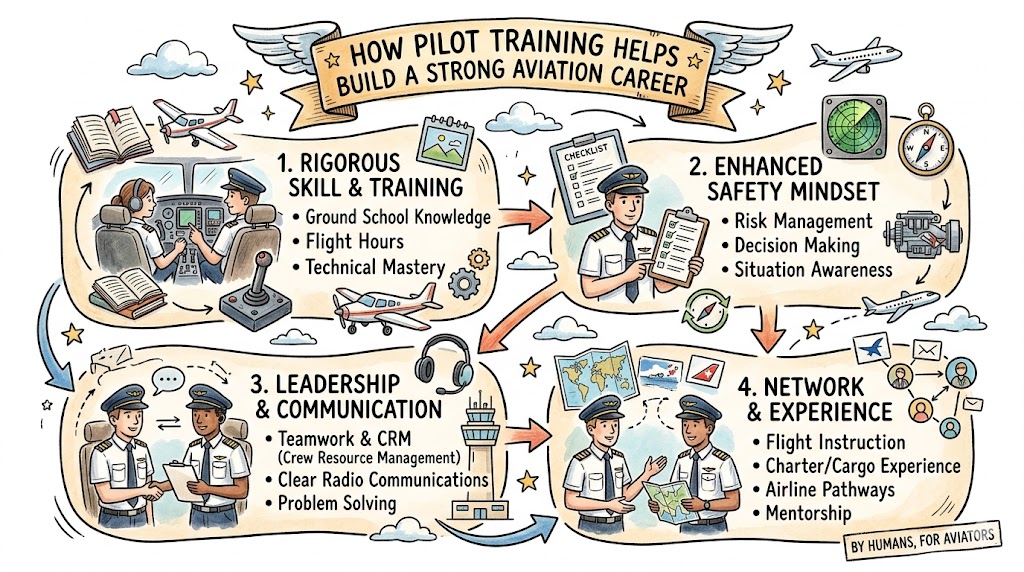
Pilot training is the foundation of every strong aviation career. For aspiring pilots, aviation is not only about flying an aircraft; it is about learning discipline, safety, responsibility, communication, decision-making, technical knowledge, and professional behavior. A successful pilot must be able to operate safely, follow procedures, understand weather, communicate with air traffic control, manage pressure, and make smart decisions in changing conditions.
Whether someone wants to become an airline pilot, corporate pilot, charter pilot, flight instructor, cargo pilot, or private aviation professional, structured pilot training provides the skills and confidence needed to move forward. It helps students understand how aircraft work, how flight operations are managed, and how pilots think before, during, and after every flight.
Pilot training also gives students a clear pathway. Beginners start with basic aircraft control and gradually move toward advanced skills such as instrument flying, commercial operations, multi-engine aircraft, and professional cockpit management. Every stage builds knowledge and experience that supports future career growth.
Aviation is a skill-based profession where learning never stops. Strong training helps aspiring pilots build the right habits early, and those habits often shape the rest of their aviation journey.
Why Pilot Training Is Essential
Pilot training is essential because aviation demands accuracy, discipline, and safety-focused thinking. A pilot must understand both the aircraft and the environment in which it operates. Training helps students develop the technical and mental skills required for safe flying.
In aviation, small decisions can have major consequences. This is why pilots are trained to prepare carefully, follow checklists, review weather, understand aircraft limitations, communicate clearly, and stay calm during unexpected situations.
Pilot training helps build:
- Safety awareness: Students learn how to identify risks before and during flight.
- Aircraft control: Training teaches smooth handling, takeoffs, landings, climbs, descents, and turns.
- Decision-making: Pilots learn how to choose safe options under changing conditions.
- Regulatory knowledge: Students understand aviation rules, airspace, and operating procedures.
- Emergency readiness: Training prepares pilots to respond to abnormal and emergency situations.
- Communication skills: Pilots learn professional radio communication with air traffic control and other aircraft.
- Discipline: Every flight requires planning, checklists, focus, and responsibility.
- Confidence: Practice and instructor guidance help students become more comfortable in the cockpit.
- Professional habits: Training creates habits that support long-term aviation careers.
Without structured training, a student may learn isolated flying skills but miss the professional mindset required in aviation. Good pilot training connects knowledge, skill, safety, and judgment.
Building Core Flight Skills
The first major benefit of pilot training is the development of core flight skills. These are the practical abilities every pilot needs before moving into advanced aviation roles.
Aircraft Handling
Students learn how to control the aircraft safely and smoothly. This includes using the flight controls, managing engine power, maintaining altitude, controlling airspeed, and understanding how the aircraft responds in different phases of flight.
Good aircraft handling builds confidence. It also helps students develop a natural feel for the aircraft, which becomes important during takeoff, landing, turbulence, and abnormal situations.
Takeoff and Landing Skills
Takeoffs and landings are some of the most important parts of flight training. Students learn how to manage runway alignment, airspeed, climb attitude, approach path, flare, touchdown, and braking.
Landing skill takes practice. Through repeated training, students learn how wind, runway length, aircraft weight, and weather conditions affect landing performance.
Navigation
Navigation is a key part of becoming a capable pilot. Students learn how to plan routes, read charts, use navigation tools, track position, estimate time, monitor fuel, and make route adjustments when needed.
Strong navigation skills are useful for cross-country flying, commercial operations, and future professional pilot roles.
Communication with Air Traffic Control
Clear communication is essential in aviation. During pilot training, students learn how to speak with air traffic control, understand instructions, read back clearances, and use correct aviation phraseology.
This builds confidence, especially for students who are nervous about radio calls. Professional communication is a major part of aviation career readiness.
Situational Awareness
Situational awareness means understanding what is happening around the aircraft. Pilots must know their location, altitude, weather, fuel status, traffic, airspace, aircraft performance, and next steps.
Training helps students develop the habit of thinking ahead. This is one of the most important qualities of a strong pilot.
Weather Understanding
Weather affects nearly every flight decision. Pilot training teaches students how to understand weather reports, wind, visibility, cloud conditions, turbulence, storms, and flight limitations.
A strong aviation career requires good weather judgment. Pilots must know when it is safe to fly and when it is better to delay or cancel.
Flight Planning and Fuel Management
Flight planning teaches students how to prepare before flight. This includes checking weather, selecting routes, reviewing aircraft performance, calculating fuel needs, checking alternates, and understanding airport information.
Fuel management is a critical skill. Training teaches students to plan carefully and monitor fuel throughout the flight.
Emergency Response
Pilot training prepares students for unexpected situations. These may include engine problems, communication issues, instrument failures, weather changes, or landing concerns.
Students learn how to stay calm, follow procedures, and make safe decisions. Emergency training builds confidence and responsibility.
Progression Through Pilot Certifications
A strong aviation career usually develops through a step-by-step training pathway. Each stage adds new knowledge, responsibility, and career opportunity.
Private Pilot Training
Private pilot training is often the first major step. Students learn basic flying skills, aircraft control, navigation, communication, weather understanding, and flight safety.
This stage helps students become comfortable in the cockpit and understand the responsibilities of acting as pilot in command under appropriate conditions.
Instrument Rating
Instrument training teaches pilots how to fly using cockpit instruments when outside visibility is limited. This is important for pilots who want to fly more professionally and safely in controlled environments.
Instrument training improves precision, discipline, navigation skills, and workload management. It is also valuable for future commercial and airline career paths.
Commercial Pilot Training
Commercial pilot training prepares students to fly to a higher professional standard. It focuses on advanced maneuvers, accuracy, judgment, aircraft performance, and professional responsibility.
This stage is important for those who want to be paid as pilots in approved aviation roles. It also helps students think more like professionals rather than hobby flyers.
Multi-Engine Training
Multi-engine training teaches pilots how to operate aircraft with more than one engine. This is important for many professional aviation careers because larger aircraft often use multiple engines.
Students learn engine management, performance planning, emergency procedures, and workload control. Multi-engine experience can support airline, charter, cargo, and corporate aviation goals.
Flight Instructor Training
Some pilots become flight instructors to build experience, teach others, and strengthen their own aviation knowledge. Teaching helps pilots improve communication, leadership, and technical understanding.
Flight instruction can be a valuable career step because instructors gain experience while helping new students enter aviation.
Airline and Advanced Training Pathways
Pilots who want airline careers may continue toward advanced qualifications, crew training, simulator training, and airline-specific procedures. These stages build on the foundation created during earlier pilot training.
The stronger the early training foundation, the easier it becomes to handle advanced aviation learning.
Real-World Experience and Flight Hours
Flight hours are an important part of aviation career development, but the quality of experience matters as much as the number of hours. Pilot training helps students build useful experience through real flight situations.
Students may experience:
- Different weather conditions
- Various airport environments
- Controlled and uncontrolled airspace
- Cross-country routes
- Radio communication with controllers
- Navigation challenges
- Traffic pattern operations
- Emergency procedure practice
- Different aircraft systems
- Instructor feedback and correction
Each flight builds practical knowledge. Students learn how aircraft behave, how weather affects planning, how airports operate, and how to manage real cockpit workload.
Flight experience also builds judgment. A student may learn when to continue, when to divert, when to ask for help, and when to delay a flight. These decisions help shape professional maturity.
For future aviation careers, flight hours show exposure and practice, while training quality shows discipline and readiness.
Developing a Safety-First Mindset
A strong aviation career depends on safety-first thinking. Pilot training teaches students that safety is not a single checklist item; it is a mindset that must be applied before, during, and after every flight.
Safety-first habits include:
- Reviewing weather carefully
- Inspecting the aircraft before flight
- Following checklists
- Understanding aircraft limitations
- Managing fuel responsibly
- Avoiding unnecessary risks
- Communicating clearly
- Staying aware of surroundings
- Making conservative decisions
- Learning from mistakes
Good training helps students understand that a safe pilot is not the one who takes unnecessary risks, but the one who makes sound decisions based on preparation and judgment.
This mindset is valuable in every aviation career path, from flight instruction to airline operations.
Building Confidence Under Pressure
Aviation can be demanding. Pilots may face weather changes, radio congestion, unfamiliar airports, traffic, mechanical concerns, or passenger pressure. Pilot training helps students build confidence by exposing them to challenges in a controlled learning environment.
At first, many students feel nervous about radio calls, landings, navigation, or emergency procedures. With repeated practice and instructor support, these tasks become more manageable.
Confidence grows when students understand:
- What to do
- Why it matters
- How to respond if something changes
- When to ask for help
- How to stay calm
- How to follow procedures
Professional pilots need confidence, but not overconfidence. Training helps students develop steady, realistic confidence based on skill and preparation.
Improving Communication and Teamwork
Communication is one of the most important pilot skills. Pilots must communicate with air traffic control, instructors, maintenance teams, passengers, dispatchers, crew members, and other aviation professionals.
Pilot training teaches students how to communicate clearly, briefly, and professionally. This includes radio calls, cockpit communication, safety briefings, and training discussions.
Communication skills support aviation careers by helping pilots:
- Understand instructions accurately
- Avoid confusion
- Work well with crews
- Share safety concerns
- Ask useful questions
- Explain decisions
- Build professional relationships
Teamwork becomes especially important in airline, corporate, cargo, and charter aviation. Even single-pilot training builds the discipline needed for future crew environments.
Understanding Aircraft Systems
Pilot training introduces students to aircraft systems and how they affect flight operations. A pilot does not need to be a mechanic, but they must understand how major systems work and how to recognize problems.
Students learn about:
- Engine operation
- Fuel systems
- Electrical systems
- Flight instruments
- Landing gear where applicable
- Brakes
- Propeller systems where applicable
- Avionics
- Environmental systems where applicable
- Warning indicators
- Performance limitations
Understanding aircraft systems helps pilots make better decisions. For example, if an instrument behaves unexpectedly, a trained pilot can troubleshoot calmly and follow the correct procedure.
This technical understanding becomes more important as pilots move into complex aircraft and professional operations.
Learning Aviation Regulations and Procedures
Aviation is highly procedure-based. Pilot training teaches students how to operate within rules, airspace structures, airport procedures, and safety requirements.
Students learn about:
- Airspace categories
- Right-of-way rules
- Weather minimums
- Flight planning requirements
- Airport operations
- Radio procedures
- Aircraft documents
- Pilot responsibilities
- Maintenance-related awareness
- Operating limitations
Regulatory knowledge supports safe and legal flying. It also builds professional discipline because pilots must understand that aviation decisions must meet both safety and regulatory expectations.
For career-focused pilots, this knowledge becomes part of daily professional responsibility.
Networking and Industry Connections
Pilot training also helps students build connections in the aviation industry. Flight schools, instructors, classmates, maintenance teams, examiners, and aviation organizations can all become part of a student’s professional network.
Networking matters because aviation careers often grow through relationships, recommendations, mentorship, and shared experience. A student who stays professional, respectful, and committed during training can build a strong reputation early.
Training programs may help students:
- Connect with instructors and mentors
- Meet other aspiring pilots
- Learn about career paths
- Understand job expectations
- Discover internship or entry-level opportunities
- Build references
- Learn from experienced aviation professionals
Aviation is a community-based industry. The relationships formed during training can support future learning and career growth.
Career Opportunities After Pilot Training
Pilot training can open the door to several aviation career paths. The right path depends on certifications, flight hours, personal goals, location, aircraft experience, and employer requirements.
Airline Pilot
Many students dream of becoming airline pilots. This career path requires advanced training, flight experience, professionalism, crew coordination, and strong technical knowledge. Pilot training builds the foundation for airline operations.
Corporate Pilot
Corporate pilots fly business aircraft for companies, executives, or private owners. This role often requires flexibility, professionalism, customer service awareness, and strong operational judgment.
Charter Pilot
Charter pilots operate flights for private passengers or organizations. This career path requires customer service, schedule flexibility, safety discipline, and experience with different routes and airports.
Flight Instructor
Flight instructors train new pilots and help them build aviation skills. This role develops teaching ability, leadership, patience, and strong technical understanding.
Cargo Pilot
Cargo pilots transport goods and logistics shipments. This career path may involve night operations, route discipline, weather planning, and strong aircraft management skills.
Aerial Survey Pilot
Aerial survey pilots support mapping, photography, inspection, and observation missions. This work requires precision flying, route planning, and attention to detail.
Agricultural Aviation
Agricultural aviation involves specialized flying for farming and crop-related operations. It requires advanced aircraft handling, training, and careful risk management.
Specialized Aviation Roles
Pilot training can also support paths in emergency services, aviation management, aircraft sales, ferry flying, test support roles, and other specialized aviation operations depending on qualifications and experience.
How Pilot Training Builds Professional Discipline
Professional discipline is one of the most valuable outcomes of pilot training. Aviation rewards consistency, preparation, and respect for procedures.
Training teaches students to:
- Arrive prepared
- Study regularly
- Respect instructor feedback
- Follow checklists
- Use standard procedures
- Maintain accurate logbooks
- Review each flight
- Learn from mistakes
- Stay humble
- Keep improving
These habits help students become more employable and more reliable as aviation professionals. Employers value pilots who are disciplined, teachable, safe, and responsible.
Tips for Maximizing Pilot Training
Pilot training is an investment of time, energy, and money. Students should approach it with focus and commitment.
Helpful tips include:
- Choose a flight school with experienced instructors.
- Study ground knowledge consistently.
- Fly regularly to maintain progress.
- Review each lesson before and after flying.
- Keep accurate flight logs.
- Ask questions when unsure.
- Practice radio communication.
- Use simulator training where available.
- Learn from instructor feedback.
- Build good checklist habits.
- Stay physically and mentally prepared.
- Network with aviation professionals.
- Understand the career path you want.
- Stay patient during difficult training stages.
- Focus on safety more than speed.
Students who train with consistency usually build stronger skills and better confidence.
Common Challenges During Pilot Training
Pilot training can be exciting, but it also comes with challenges. Understanding these challenges helps students stay motivated.
Weather Delays
Weather can delay lessons and affect training schedules. Students should use weather delays for ground study, simulator practice, and lesson review.
Learning Radio Communication
Radio communication can feel intimidating at first. Practice, listening, and repetition help students become more confident.
Managing Training Costs
Pilot training can require careful budgeting. Students should plan for flight time, instructor time, books, exams, equipment, and possible extra practice.
Handling Checkride Pressure
Practical exams can feel stressful. Consistent preparation, instructor feedback, and mock evaluations can help reduce pressure.
Building Confidence
Some students struggle with landings, navigation, or emergency procedures. Progress comes through practice and patience.
Balancing Theory and Flying
Good pilots need both practical flying skills and strong ground knowledge. Students should avoid focusing only on flight time and ignoring theory.
Why Choosing the Right Flight School Matters
The flight school you choose can strongly influence your training experience. A good school provides structured lessons, experienced instructors, safe aircraft, clear scheduling, and professional support.
When choosing a flight school, consider:
- Instructor experience
- Aircraft condition
- Safety culture
- Training structure
- Scheduling availability
- Maintenance standards
- Ground school support
- Student progress tracking
- Communication quality
- Career guidance
- Transparent cost information
- Reputation among students
A strong school does not simply help students pass tests. It helps them become better pilots.
FAQs
1- What is the first step in becoming a professional pilot?
The first step is to research pilot training options and understand the basic requirements for starting flight training. Most students begin with introductory lessons, ground school, and private pilot training. Choosing the right flight school and instructor is also important.
2- How long does it take to complete pilot training?
The time needed for pilot training depends on training frequency, weather, student progress, aircraft availability, and career goals. Students who train regularly often progress more smoothly. Part-time students may take longer because gaps between lessons can slow skill development.
3- What certifications are needed for an airline career?
An airline career usually requires a progression through private pilot training, instrument training, commercial pilot training, multi-engine experience, and advanced airline-focused qualifications. Exact requirements can vary, so students should verify current rules with aviation professionals.
4- How many flight hours are required to become a commercial pilot?
Flight hour requirements can vary by country, training path, and aviation authority. Students should confirm current requirements with their flight school or aviation regulator. Beyond total hours, quality of training and decision-making ability are also important.
5- Can flight training be done while studying in college?
Yes, many students complete flight training while studying in college, but it requires careful time management. A consistent schedule helps students retain flying skills. Balancing study, training, and rest is important for safe progress.
6- Do all pilots need an instrument rating?
Not every pilot needs an instrument rating for basic recreational flying, but it is highly valuable for professional aviation careers. Instrument training improves precision, navigation, weather decision-making, and cockpit discipline.
7- What skills are most important for a successful aviation career?
Important skills include aircraft control, communication, situational awareness, decision-making, weather understanding, discipline, teamwork, and emergency response. A strong pilot also stays humble and continues learning throughout their career.
8- How can I gain experience quickly during training?
The best way to gain experience efficiently is to train consistently, prepare before each lesson, review mistakes, and fly regularly when safe and practical. Simulator practice, ground study, and instructor feedback can also improve progress.
9- Are there opportunities to network during pilot training?
Yes, pilot training can help students meet instructors, other students, examiners, maintenance professionals, and aviation employers. Building a professional reputation during training can support future career opportunities.
10- What career paths are available after completing pilot training?
Pilot training can lead to careers as an airline pilot, corporate pilot, charter pilot, cargo pilot, flight instructor, aerial survey pilot, or specialized aviation pilot. The right path depends on training level, flight hours, certifications, and personal goals.
Conclusion
Pilot training helps build a strong aviation career by developing the technical skills, safety mindset, confidence, and discipline needed for professional flying. It teaches students how to control aircraft, communicate clearly, understand weather, follow regulations, manage emergencies, and make sound decisions under pressure. Training also creates a pathway through certifications, flight hours, advanced ratings, and career opportunities in different aviation sectors. Beyond flying skills, it helps students build professionalism, networking connections, and long-term learning habits. For anyone serious about an aviation career, structured pilot training is not just the starting point; it is the foundation for growth, responsibility, and future success in the sky.

