
Introduction
Beginning private pilot training is an exciting step toward learning one of the most rewarding skills in aviation. Whether your goal is to fly for recreation, travel more efficiently, or build a foundation for a professional aviation career, proper preparation can make your training experience smoother and more enjoyable.
Many new students arrive at flight school with questions about what they need, how to prepare, what equipment to buy, and what to expect during their first lessons. Having a structured checklist helps you stay organized, build confidence, and develop good habits from the very beginning.
This guide provides a comprehensive private pilot training checklist for new students, covering everything from choosing the right flight school and preparing for lessons to developing effective study habits and maintaining a positive attitude throughout your training.
Why a Training Checklist Is Important
Learning to fly involves much more than operating an aircraft. It requires planning, discipline, communication, and consistent practice.
A checklist helps you:
- Stay organized
- Prepare for each lesson
- Reduce unnecessary stress
- Improve learning efficiency
- Build safe aviation habits
- Track your progress
- Develop confidence as a student pilot
Following a structured plan allows you to focus on learning instead of worrying about what comes next.
Choose the Right Flight School
Your flight school plays an important role in your learning experience.
When selecting a school, consider:
- Instructor qualifications
- Training aircraft
- Safety culture
- Scheduling flexibility
- Maintenance standards
- Student support
- Training environment
Visiting the school before enrolling can help you understand how training is conducted and whether it matches your goals.
Meet Basic Eligibility Requirements
Before beginning training, ensure you meet the basic requirements established by your training provider and applicable aviation regulations.
Typical requirements include:
- Meeting minimum age requirements
- Understanding English
- Providing government-issued identification
- Meeting medical requirements where applicable
- Completing enrollment paperwork
Confirm all requirements with your flight school before your first lesson.
Complete Required Paperwork
Having documentation ready avoids unnecessary delays.
Common documents include:
- Student enrollment forms
- Government-issued ID
- Medical certificate (if required)
- Pilot logbook
- Emergency contact information
- Training agreements
Keep important documents organized in your flight bag.
Gather Essential Flight Training Equipment
Having the right equipment improves both comfort and learning.
Essential items include:
Aviation Headset
A quality headset improves communication with your instructor and reduces cockpit noise.
Pilot Logbook
Your logbook records every training flight and becomes an important part of your aviation record.
Flight Bag
Use a dedicated flight bag to organize training materials.
Kneeboard
A kneeboard provides a convenient writing surface inside the cockpit.
Notebook and Pen
Take notes during briefings and after each lesson.
Sunglasses
Good sunglasses improve visibility while reducing glare.
Flashlight
Useful for early morning, evening, or night training sessions.
Water Bottle
Staying hydrated helps maintain concentration.
Learn Basic Aviation Knowledge
You do not need to become an expert before your first lesson, but understanding basic aviation concepts makes learning easier.
Topics worth reviewing include:
- Aircraft controls
- Flight instruments
- Basic aerodynamics
- Airspace
- Aviation terminology
- Weather fundamentals
- Radio communication
Familiarity with these subjects helps you follow instructor explanations more confidently.
Prepare Physically and Mentally
Flying requires focus, alertness, and good decision-making.
Before each lesson:
- Get enough sleep
- Eat a balanced meal
- Stay hydrated
- Wear comfortable clothing
- Arrive with a positive attitude
- Allow enough travel time
Good preparation supports better learning.
Dress for Comfort and Safety
Choose clothing suitable for both the weather and cockpit environment.
Recommended attire includes:
- Comfortable shirt
- Long pants or weather-appropriate clothing
- Closed-toe shoes
- Sunglasses
- Light jacket if necessary
Avoid restrictive clothing or footwear that limits movement.
Understand Pre-Flight Inspection
Every lesson begins with a careful inspection of the aircraft.
You will learn how to check:
Fuel
Confirm quantity and quality.
Oil
Verify proper engine oil levels.
Tires
Inspect inflation and overall condition.
Flight Controls
Ensure smooth movement without obstruction.
Propeller
Look for cracks, damage, or unusual wear.
Exterior
Inspect the aircraft for leaks, dents, or loose panels.
Developing a consistent pre-flight routine is one of the most important habits in aviation.
Build Strong Study Habits
Learning continues even after the aircraft is parked.
Helpful study habits include:
- Reviewing notes after every lesson
- Reading training materials regularly
- Practicing aviation terminology
- Studying flight procedures
- Reviewing instructor feedback
- Preparing before each lesson
Consistent study often leads to faster progress.
Communicate with Your Flight Instructor
Your instructor is your primary learning resource.
Always:
- Ask questions
- Discuss your goals
- Accept constructive feedback
- Report concerns honestly
- Request clarification when needed
Open communication builds trust and improves learning.
Understand the Importance of Time Management
Flight training requires regular commitment.
Helpful habits include:
- Arrive early
- Review lessons beforehand
- Keep training appointments
- Plan study time
- Stay organized
Consistency helps maintain learning momentum.
Stay Healthy Throughout Training
Your physical condition affects flight performance.
Healthy habits include:
- Regular exercise
- Adequate hydration
- Balanced nutrition
- Good sleep
- Managing stress
Healthy students often learn more effectively.
Common Mistakes New Student Pilots Make
Many beginners make similar mistakes.
Being aware of them helps avoid unnecessary setbacks.
Common examples include:
- Arriving late
- Poor lesson preparation
- Skipping study sessions
- Expecting immediate perfection
- Wearing uncomfortable clothing
- Forgetting important documents
- Becoming discouraged after mistakes
- Ignoring instructor advice
Remember that every experienced pilot once faced similar challenges.
Tips for Staying Motivated During Training
Pilot training is a gradual process.
Stay motivated by:
Setting Small Goals
Celebrate each milestone as your skills improve.
Training Consistently
Regular lessons help reinforce learning.
Reviewing Progress
Looking back at earlier lessons highlights how much you’ve improved.
Asking Questions
Curiosity leads to deeper understanding.
Learning Outside the Cockpit
Books, videos, and aviation discussions complement flight lessons.
Staying Positive
Every lesson offers an opportunity to improve.
Benefits of Following a Private Pilot Training Checklist
A structured checklist offers many advantages.
Better Organization
Knowing what to prepare reduces unnecessary stress.
Improved Confidence
Preparation helps students feel more comfortable during lessons.
Faster Learning
Prepared students absorb information more efficiently.
Greater Safety Awareness
Developing good habits from the beginning supports safer flying.
Reduced Stress
Being organized allows students to focus on learning rather than logistics.
Strong Foundation
A structured approach builds long-term aviation success.
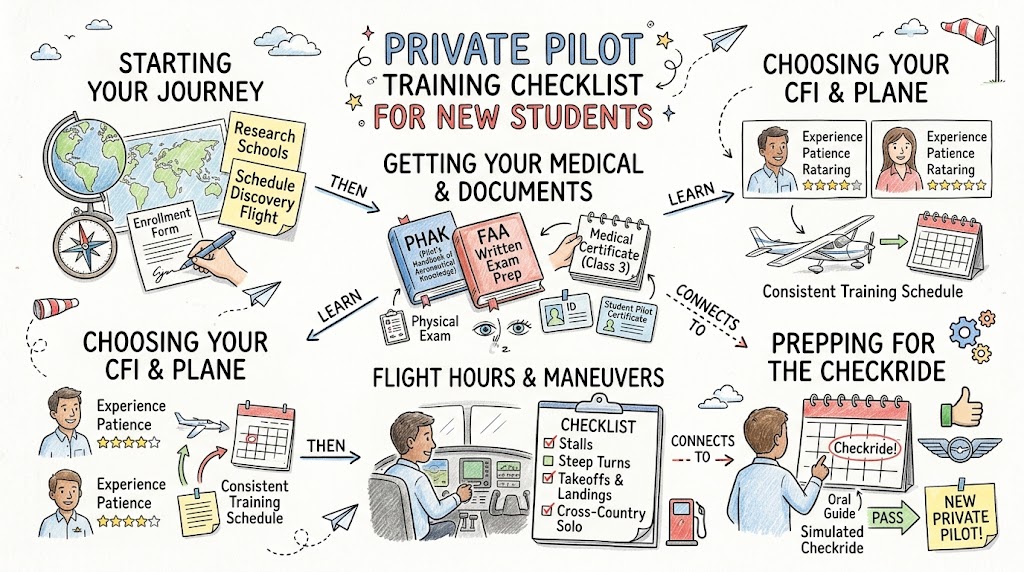
Private Pilot Training Checklist
Before Starting Training:
- Research flight schools
- Meet eligibility requirements
- Complete enrollment paperwork
- Obtain required identification
- Organize training documents
Training Equipment:
- Aviation headset
- Pilot logbook
- Flight bag
- Kneeboard
- Notebook
- Pen
- Sunglasses
- Water bottle
- Flashlight
Before Every Lesson:
- Sleep well
- Eat a healthy meal
- Stay hydrated
- Dress comfortably
- Arrive early
- Review previous lesson
- Bring required documents
During Training:
- Ask questions
- Listen carefully
- Take notes
- Accept feedback
- Practice consistently
- Review after every lesson
Frequently Asked Questions
1. What should I do before starting private pilot training?
Research flight schools, understand the training process, gather required documents, purchase essential equipment, and prepare both physically and mentally for learning.
2. What equipment do I need?
Basic equipment usually includes an aviation headset, pilot logbook, flight bag, notebook, pen, sunglasses, kneeboard, and other items recommended by your instructor.
3. Do I need previous flying experience?
No. Private pilot training is designed specifically for beginners with no previous flight experience.
4. How long does training take?
Training duration depends on lesson frequency, weather conditions, individual progress, and study habits. Regular training generally leads to faster advancement.
5. What should I study first?
Begin with aviation terminology, aircraft controls, basic aerodynamics, flight instruments, weather awareness, and safety procedures.
6. What documents should I bring?
Bring government-issued identification, training paperwork, your pilot logbook, and any additional documents requested by your flight school.
7. What happens during the first lesson?
Your instructor will introduce the aircraft, explain safety procedures, perform a pre-flight inspection, conduct the flight lesson, and review your progress afterward.
8. How often should I train?
Consistent lessons help reinforce skills and improve learning. Discuss an appropriate training schedule with your instructor based on your availability and goals.
9. Why is pre-flight inspection important?
Pre-flight inspections help identify potential issues before takeoff, ensuring the aircraft is safe and ready for flight.
10. How can I become a better student pilot?
Stay organized, prepare before each lesson, study consistently, ask questions, accept instructor feedback, and maintain a positive attitude throughout training.
Conclusion
Starting private pilot training is the first step toward achieving one of aviation’s most rewarding goals. While the learning process requires commitment and consistency, proper preparation makes every lesson more productive and enjoyable. Choosing the right flight school, organizing your equipment, understanding basic aviation concepts, developing strong study habits, and maintaining open communication with your instructor all contribute to long-term success.
By following a structured private pilot training checklist, new students can build confidence, improve safety awareness, and establish the strong foundation needed to become skilled and responsible pilots. Every accomplished aviator started with a first lesson, and thoughtful preparation is the key to making that journey successful.

