
Introduction
Becoming a commercial pilot is a dream that requires dedication, discipline, technical knowledge, and a strong commitment to continuous learning. Unlike recreational flying, commercial aviation demands a professional mindset where safety, decision-making, and responsibility become essential parts of every flight.
Many students enter pilot training with enthusiasm, but successful commercial pilots understand that preparation goes beyond simply learning how to operate an aircraft. A strong foundation requires proper planning, consistent practice, aviation knowledge, and the development of professional habits.
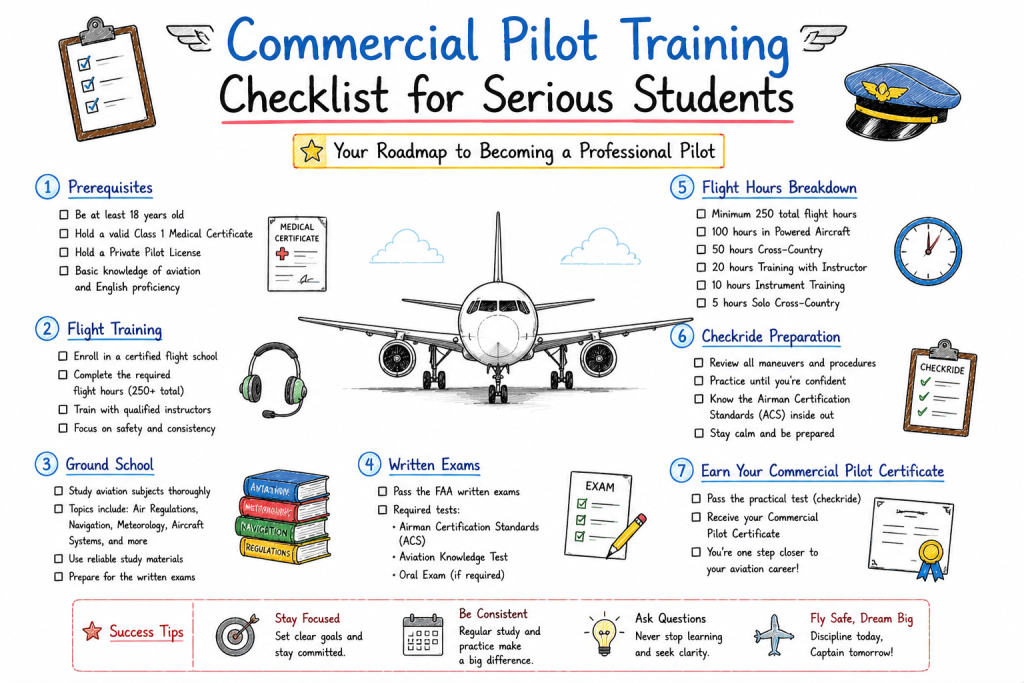
For serious students, having a clear roadmap can make the training journey more organized and effective. A commercial pilot training checklist helps aspiring pilots understand the important steps involved, from selecting the right flight school to preparing for flight evaluations and building skills required for an aviation career.
Understanding Commercial Pilot Training
Commercial pilot training prepares students to operate aircraft professionally and develop the skills required for aviation careers.
The training process focuses on:
- Advanced aircraft handling
- Flight planning
- Navigation skills
- Aviation regulations
- Weather interpretation
- Aircraft systems
- Emergency procedures
- Professional decision-making
A commercial pilot must do more than control an aircraft. They must understand risk management, communicate effectively, analyze situations, and make safe decisions under different conditions.
Why Serious Preparation Matters in Pilot Training
Professional aviation requires a higher level of commitment than casual flying.
Serious preparation helps students:
- Progress efficiently
- Build stronger flying skills
- Reduce training challenges
- Develop professional habits
- Improve confidence
Successful pilots understand that every lesson contributes to their long-term aviation career.
A strong preparation approach includes both technical development and personal discipline.
Commercial Pilot Career Roadmap
Understanding the overall aviation journey helps students create realistic goals.
Step 1: Define Your Aviation Goals
Before beginning training, students should understand:
- Why they want to become pilots
- Their preferred aviation career path
- Long-term flying goals
- Training expectations
Some students aim for airline careers, while others may pursue corporate aviation, charter operations, or other professional flying opportunities.
Step 2: Research Training Options
Choosing the right training environment is an important decision.
Students should evaluate:
- Flight school reputation
- Instructor experience
- Aircraft availability
- Training structure
- Safety standards
- Student support
The right training environment can significantly influence learning progress.
Step 3: Build a Strong Foundation
Before advanced commercial training, students must develop fundamental aviation skills.
Important areas include:
- Aircraft control
- Aviation theory
- Flight procedures
- Safety awareness
- Navigation basics
A strong foundation makes advanced training easier.
Commercial Pilot Training Checklist
1. Create a Clear Aviation Training Plan
Serious students should begin with a structured plan.
Consider:
- Training timeline
- Learning goals
- Financial planning
- Flight schedule
- Career objectives
A clear plan helps students remain focused throughout training.
2. Choose the Right Flight School
The flight school you select plays a major role in your development.
Important factors include:
Experienced Flight Instructors
Good instructors help students:
- Understand aviation concepts
- Improve techniques
- Correct mistakes
- Develop confidence
Aircraft Availability
Reliable aircraft availability helps maintain consistent training progress.
Safety Culture
A professional training environment should prioritize:
- Proper procedures
- Aircraft maintenance
- Safety practices
- Responsible decision-making
Career Support
Students benefit from schools that provide guidance beyond basic training.
3. Complete Ground School Preparation
Ground knowledge is the foundation of professional flying.
Important subjects include:
Aviation Regulations
Students learn:
- Flight rules
- Pilot responsibilities
- Operating requirements
Aerodynamics
Understanding aircraft movement helps pilots make better decisions.
Topics include:
- Lift
- Drag
- Stability
- Aircraft performance
Weather Knowledge
Pilots must understand:
- Weather patterns
- Wind conditions
- Forecast information
- Weather risks
Navigation
Navigation training includes:
- Route planning
- Position awareness
- Flight calculations
Aircraft Systems
Students learn how aircraft components work, including:
- Engines
- Electrical systems
- Flight controls
- Instruments
4. Maintain Consistent Flight Practice
Consistency is one of the most important factors in successful pilot training.
Irregular training can lead to:
- Skill loss
- Reduced confidence
- Additional review time
Serious students should:
- Maintain regular lessons
- Practice procedures frequently
- Review previous flights
- Stay engaged between lessons
5. Develop Strong Aircraft Knowledge
Professional pilots must understand the aircraft they operate.
Students should learn:
- Aircraft limitations
- Performance characteristics
- Emergency procedures
- Cockpit systems
- Operating procedures
Knowing the aircraft improves confidence and safety.
6. Master Flight Preparation
A professional pilot prepares before every flight.
Before a lesson, students should review:
- Flight objectives
- Weather conditions
- Aircraft information
- Planned procedures
- Possible challenges
Preparation allows more time to focus on improving skills.
7. Develop Professional Pilot Habits
Successful pilots develop professional habits early.
Important habits include:
Punctuality
Arriving prepared and on time demonstrates professionalism.
Checklist Discipline
Following procedures consistently improves safety.
Communication
Clear communication is essential for:
- Instructors
- Air traffic controllers
- Future flight crews
Responsibility
Pilots must take ownership of decisions and actions.
8. Improve Decision-Making Skills
Commercial pilots must make safe decisions in changing situations.
Students should practice:
- Risk evaluation
- Weather decisions
- Aircraft limitations
- Emergency responses
- Situational awareness
Good decision-making is one of the most important skills in aviation.
9. Prepare for Written Examinations
Academic preparation is an essential part of pilot training.
Students should:
- Create study schedules
- Review aviation materials
- Practice questions
- Understand concepts rather than memorize information
Strong theoretical knowledge supports better cockpit decisions.
10. Prepare for Flight Evaluations
Flight evaluations assess whether students can operate safely and professionally.
Preparation should include:
- Reviewing flight maneuvers
- Practicing procedures
- Understanding aircraft systems
- Improving communication
- Building confidence
Essential Skills Every Commercial Pilot Student Needs
Technical Flying Skills
Students must develop:
- Aircraft control
- Precision flying
- Navigation ability
- Flight planning skills
Communication Skills
Professional pilots need effective communication with:
- Air traffic control
- Crew members
- Instructors
- Ground personnel
Safety Awareness
Safety should influence every decision.
Pilots must understand:
- Personal limitations
- Aircraft limitations
- Environmental risks
Adaptability
Aviation conditions can change quickly. Pilots must remain flexible and make appropriate decisions.
Common Mistakes Serious Pilot Students Should Avoid
1. Choosing a Flight School Without Research
Selecting a school only based on price can create problems.
Students should consider:
- Training quality
- Instructor experience
- Aircraft condition
- Student success support
2. Training Inconsistently
Long breaks between lessons can slow progress.
Regular practice improves:
- Memory
- Confidence
- Skill development
3. Ignoring Ground Training
Some students focus only on flying.
However, aviation knowledge supports:
- Better decisions
- Safer operations
- Stronger performance
4. Focusing Only on Flight Hours
Professional pilots are developed through quality training, not only accumulated hours.
Students should focus on:
- Understanding procedures
- Improving skills
- Learning from every flight
5. Ignoring Instructor Feedback
Feedback helps students identify weaknesses.
Successful students:
- Listen carefully
- Accept corrections
- Practice improvements
6. Poor Time Management
Pilot training requires balancing:
- Flight lessons
- Study
- Personal responsibilities
Good organization improves progress.
Role of Flight Simulators in Commercial Pilot Training
Flight simulators are valuable tools that support traditional flight training.
They allow students to practice:
- Cockpit procedures
- Emergency scenarios
- Instrument operations
- Decision-making
Simulation provides a controlled environment where students can repeat procedures and build confidence.
Financial Planning for Pilot Training
Commercial pilot training requires careful planning.
Students should consider:
- Training costs
- Flight frequency
- Study materials
- Equipment requirements
- Additional learning resources
Avoiding unnecessary delays can help improve training efficiency.
A well-planned approach allows students to focus more effectively on skill development.
Preparing for Airline Career Expectations
Commercial pilots need more than technical flying ability.
Professional aviation values:
- Discipline
- Safety awareness
- Teamwork
- Communication
- Continuous improvement
Students should begin developing these qualities during training.
Choosing the Right Commercial Pilot Training Program
A strong training program should provide:
- Experienced instructors
- Well-maintained aircraft
- Structured lessons
- Safety-focused operations
- Student guidance
The right environment helps students develop confidence and professional skills.
Why Students Choose PilotTrainingUS
Aviation students need structured training and professional guidance to successfully progress toward commercial pilot goals.
PilotTrainingUS focuses on helping aspiring pilots develop:
- Strong aviation foundations
- Professional flying skills
- Safety awareness
- Career preparation
- Confidence throughout training
A supportive training environment helps students build the skills needed for future aviation opportunities.
Commercial Pilot Training Success Checklist
Before Starting Training
✓ Research aviation career options
✓ Select a suitable flight school
✓ Understand training requirements
✓ Plan your schedule
✓ Prepare financially
During Training
✓ Attend lessons consistently
✓ Study aviation theory
✓ Review instructor feedback
✓ Practice procedures
✓ Maintain safety awareness
Before Certification
✓ Complete required training
✓ Prepare for examinations
✓ Review aircraft systems
✓ Practice flight skills
✓ Build professional confidence
Frequently Asked Questions
1. What is commercial pilot training?
Commercial pilot training prepares students to operate aircraft professionally and develop the skills required for aviation careers.
2. Who should consider commercial pilot training?
Anyone interested in pursuing professional flying careers, including airline, charter, or corporate aviation, can consider commercial pilot training.
3. How should students prepare before starting flight school?
Students should research training options, understand requirements, plan finances, and develop strong study habits.
4. Why is ground school important for commercial pilots?
Ground school provides essential knowledge about aviation regulations, weather, navigation, and aircraft systems.
5. How important is regular flight practice?
Regular practice helps students maintain skills, improve confidence, and progress efficiently.
6. What skills do successful commercial pilots need?
Successful pilots need technical skills, communication ability, decision-making skills, discipline, and safety awareness.
7. How do students choose the right flight school?
Students should evaluate instructors, aircraft quality, training structure, safety culture, and career support.
8. What mistakes should pilot students avoid?
Common mistakes include inconsistent training, ignoring theory, poor preparation, and not accepting instructor feedback.
9. Can commercial pilot training lead to an airline career?
Yes. Commercial pilot training provides the foundation for many professional aviation career paths.
10. Why is professional discipline important in aviation?
Discipline helps pilots follow procedures, manage risks, and maintain safe operations.
Conclusion
Commercial pilot training requires dedication, preparation, and a professional mindset. Serious students understand that becoming a successful pilot involves much more than learning aircraft controls—it requires developing technical knowledge, decision-making ability, discipline, and safety awareness. Following a structured commercial pilot training checklist helps students stay organized, avoid common mistakes, and make steady progress toward their aviation goals.

