
Introduction
Aviation is one of the most disciplined and skill-oriented industries in the world. Becoming a professional pilot requires more than learning how to control an aircraft. It requires a combination of technical knowledge, practical flying skills, safety awareness, communication ability, and strong decision-making.
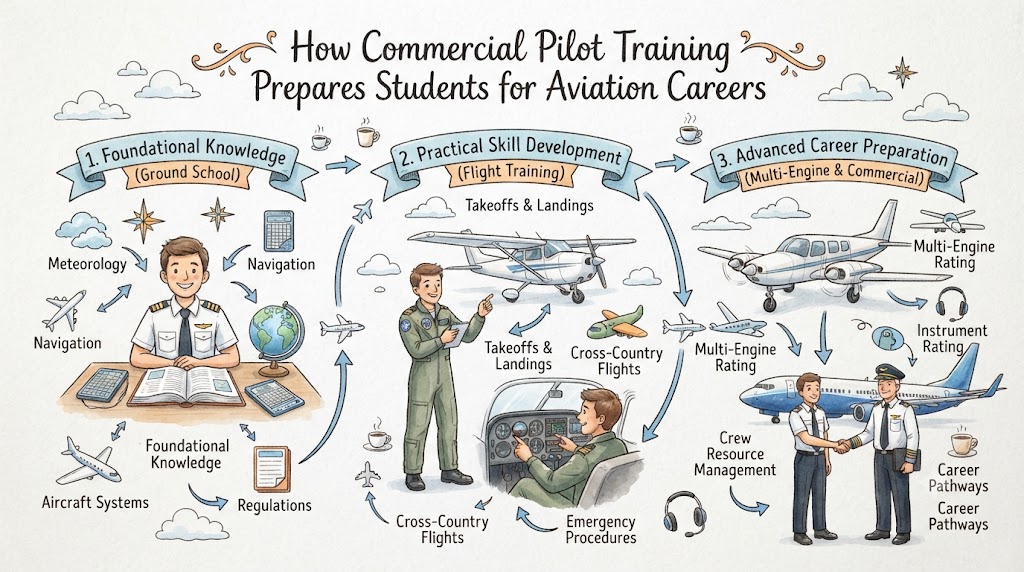
Commercial pilot training is designed to prepare students for the responsibilities of professional aviation. Through structured ground lessons and flight experience, students learn how aircraft systems work, how to plan flights, how to manage risks, and how to operate safely in different situations.
Many aspiring pilots begin their journey with a passion for flying but may not fully understand the preparation required for a professional aviation career. Commercial pilot training provides the foundation needed to develop professional habits and understand the standards expected in the aviation industry.
What Is Commercial Pilot Training?
Commercial pilot training is a structured aviation education program designed to prepare students to operate aircraft professionally.
Unlike recreational flying, commercial pilot training focuses on developing advanced skills required for professional aviation operations.
The training combines:
- Ground education
- Flight instruction
- Aircraft knowledge
- Navigation practice
- Safety procedures
- Operational decision-making
The exact requirements vary depending on the aviation authority, country, and type of aircraft training.
Why Commercial Pilot Training Is Important for Aviation Careers
Professional aviation requires pilots to handle complex situations safely and efficiently.
Commercial pilot training helps students develop:
Professional Flying Skills
Students learn how to:
- Control aircraft accurately
- Perform different flight maneuvers
- Manage aircraft performance
- Plan and execute flights
Aviation Knowledge
Pilots need strong theoretical knowledge to understand:
- Aircraft behavior
- Weather conditions
- Navigation principles
- Aviation regulations
- Flight operations
Safety Mindset
Safety is the foundation of professional aviation.
Training teaches students to:
- Identify risks
- Follow procedures
- Make responsible decisions
- Handle unexpected situations
How Commercial Pilot Training Prepares Students for Professional Flying
1. Builds Strong Flight Skills
Flight training is one of the most important parts of becoming a commercial pilot.
Students gradually develop skills through:
- Basic aircraft handling
- Takeoffs and landings
- Flight maneuvers
- Navigation flights
- Advanced operational training
Regular practice helps students become comfortable managing aircraft in different situations.
2. Develops Aviation Decision-Making
Professional pilots make important decisions before and during every flight.
Training helps students evaluate:
- Weather conditions
- Aircraft performance
- Fuel requirements
- Route planning
- Safety considerations
Good decision-making is developed through experience, instruction, and continuous learning.
3. Provides Aircraft Systems Knowledge
Pilots must understand the aircraft they operate.
Commercial pilot training introduces students to systems such as:
- Engines
- Flight controls
- Electrical systems
- Navigation equipment
- Aircraft instruments
Understanding aircraft systems helps pilots respond appropriately during normal and abnormal situations.
4. Improves Communication Skills
Communication is a critical aviation skill.
Students learn how to:
- Use aviation terminology
- Communicate with air traffic services
- Coordinate with flight teams
- Share information clearly
Professional communication improves safety and operational efficiency.
5. Teaches Professional Discipline
Commercial aviation requires strong discipline and preparation.
Training develops habits such as:
- Using checklists
- Preparing before flights
- Following procedures
- Maintaining accurate records
- Managing time effectively
These professional habits continue throughout a pilot’s career.
6. Builds Real-World Flight Experience
Flight experience helps students move from theoretical knowledge to practical application.
Students gain experience through:
- Instructor-led flights
- Solo flights
- Navigation exercises
- Different operating environments
This experience helps develop confidence and practical judgment.
Commercial Pilot Training Stages
Stage 1: Aviation Foundation
The first stage introduces students to aviation concepts.
Students learn:
- Basic flight principles
- Aircraft components
- Aviation terminology
- Safety fundamentals
This creates a foundation for future training.
Stage 2: Ground School Training
Ground school develops the theoretical knowledge required for safe flying.
Common subjects include:
Aerodynamics
Students learn how aircraft generate lift and respond to control inputs.
Meteorology
Students understand how weather affects flight decisions.
Navigation
Students learn route planning and position awareness.
Aviation Regulations
Students study rules and procedures related to aircraft operations.
Aircraft Systems
Students understand how major aircraft components function.
Stage 3: Flight Instruction
Flight instruction allows students to apply classroom knowledge in real aircraft.
Training may include:
- Aircraft control
- Takeoffs and landings
- Flight maneuvers
- Navigation flights
- Emergency procedures
- Advanced flying techniques
Stage 4: Building Flight Experience
Students continue developing skills through additional flight practice.
This stage helps improve:
- Confidence
- Decision-making
- Aircraft handling
- Operational awareness
Stage 5: Examinations and Certification
Students must demonstrate their knowledge and flying abilities through required evaluations.
These may include:
- Knowledge examinations
- Practical flight assessments
- Skill demonstrations
Successful completion leads to the appropriate certification based on applicable requirements.
Skills Students Develop During Commercial Pilot Training
Technical Flying Skills
Students learn to operate aircraft safely and efficiently.
Problem-Solving Skills
Pilots must analyze situations and make appropriate decisions.
Leadership Skills
Professional pilots often coordinate with:
- Crew members
- Ground teams
- Aviation professionals
Communication Skills
Clear communication is essential for safe operations.
Safety Awareness
Students develop the habit of considering safety in every decision.
Time Management
Pilots must manage:
- Flight preparation
- Weather checks
- Documentation
- Operational responsibilities
How Commercial Pilot Training Supports Aviation Career Paths
Commercial pilot training can prepare students for different aviation opportunities.
Airline Pilot Career
Many pilots pursue airline careers after gaining required qualifications, experience, and additional training.
Commercial pilot training provides the foundation for this pathway.
Charter Aviation
Charter operations require pilots who can manage different types of passenger flights and operational environments.
Flight Instructor Career
Some pilots become instructors to share aviation knowledge and help train future pilots.
Corporate Aviation
Business aviation requires pilots who can operate aircraft for private and corporate travel.
Aviation Management Roles
Aviation knowledge can also support careers in areas such as:
- Flight operations
- Aviation planning
- Safety management
Real-World Examples
Example 1: Weather Decision-Making
A student pilot learns weather analysis during training and applies that knowledge when deciding whether conditions are suitable for a flight.
Example 2: Communication Skills
A trainee develops professional communication abilities by practicing aviation radio procedures during flight lessons.
Example 3: Emergency Preparation
A pilot student practices emergency procedures during training to develop confidence and proper response techniques.
Challenges Students Face During Commercial Pilot Training
Maintaining Study Discipline
Aviation requires continuous learning and preparation.
Students must balance:
- Ground studies
- Flight practice
- Examinations
Managing Flight Practice
Regular training helps students maintain and improve flying skills.
Understanding Aviation Theory
Some concepts require dedication and repeated study.
Examples include:
- Navigation
- Weather
- Aircraft systems
Building Confidence
Students gradually develop confidence through training experience and instructor guidance.
How to Choose the Right Commercial Pilot Training Program
Choosing the right training environment is an important decision.
Consider:
Flight School Experience
Look for schools with experienced instructors and structured training programs.
Aircraft Availability
Reliable access to suitable training aircraft supports consistent learning.
Safety Culture
A strong safety-focused environment is essential.
Instructor Quality
Experienced instructors can significantly influence training progress.
Student Support
Good support systems help students manage their aviation journey.
Commercial Pilot Training vs Basic Flight Training
| Feature | Commercial Pilot Training | Basic Flight Training |
|---|---|---|
| Main Goal | Professional aviation preparation | Introduction to flying |
| Training Level | Advanced | Beginner |
| Flight Skills | Professional standard | Basic aircraft control |
| Knowledge Depth | Extensive | Foundational |
| Career Focus | Aviation careers | Recreational learning |
| Safety Training | Advanced | Basic safety awareness |
| Decision-Making | Professional level | Developing skills |
| Aircraft Understanding | Detailed | Introductory |
| Flight Planning | Advanced | Basic |
| Operational Awareness | High | Limited |
| Certification Path | Professional | Entry-level |
| Training Commitment | Higher | Lower |
| Instructor Involvement | Extensive | Foundational guidance |
| Future Opportunities | Broader aviation paths | Additional training required |
| Professional Preparation | Strong focus | Limited focus |
Common Mistakes Aviation Students Should Avoid
Choosing Training Only Based on Cost
Students should consider:
- Training quality
- Instructor experience
- Safety standards
- Aircraft availability
Ignoring Ground Studies
Strong theoretical knowledge improves flight performance.
Lack of Consistent Practice
Regular flying helps maintain progress.
Not Developing Professional Habits
Professional aviation requires discipline from the beginning.
Future of Aviation Careers
The aviation industry continues to evolve through:
- Advanced aircraft technology
- Digital aviation tools
- Improved training systems
- Modern flight operations
Future pilots will need strong technical skills combined with adaptability and continuous learning.
Frequently Asked Questions
1. What is commercial pilot training?
Commercial pilot training is a structured program that prepares students with the knowledge and skills required for professional aircraft operations.
2. How does pilot training prepare students for aviation careers?
It develops flying skills, technical knowledge, safety awareness, communication abilities, and professional discipline.
3. What skills do commercial pilots learn?
Students learn aircraft handling, navigation, decision-making, communication, and operational planning.
4. What subjects are studied during pilot training?
Common subjects include aerodynamics, weather, navigation, aircraft systems, regulations, and flight planning.
5. Is commercial pilot training difficult?
Training requires dedication, regular practice, and commitment, but structured programs help students progress.
6. How important is flight experience?
Flight experience is essential because it helps students develop confidence and practical decision-making skills.
7. Can commercial pilot training lead to airline careers?
Commercial pilot training provides a foundation, but additional qualifications and experience may be required for airline positions.
8. What qualities should a commercial pilot have?
Important qualities include discipline, communication skills, responsibility, adaptability, and safety awareness.
9. How do students choose a flight school?
Students should evaluate instructor experience, aircraft availability, safety culture, and training support.
10. What happens after completing commercial pilot training?
Pilots may continue gaining experience, pursue advanced qualifications, or explore different aviation career pathways.
Conclusion
Commercial pilot training prepares students for aviation careers by developing the technical skills, knowledge, discipline, and decision-making abilities required for professional flying. It transforms aviation enthusiasts into trained pilots who understand both the responsibilities and challenges of operating aircraft.
A successful aviation career requires more than completing training requirements. Continuous learning, safety awareness, practical experience, and professional development remain essential throughout a pilot’s journey.

