
Introduction
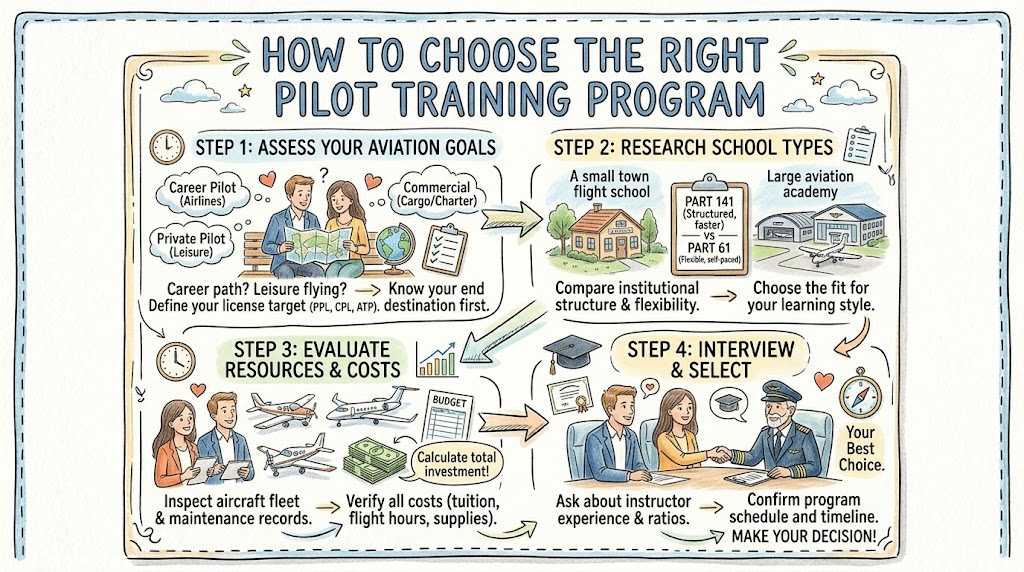
Choosing the right pilot training program is one of the most important decisions for aspiring pilots. The quality of instruction, aircraft availability, safety standards, and curriculum structure directly affect skill development, confidence, and career opportunities. A well-selected program ensures that students gain practical experience efficiently, understand aviation regulations thoroughly, and are prepared for the challenges of both recreational and professional flying. Understanding the key factors in selecting a training program helps beginners make informed decisions, optimize their learning, and set the foundation for a successful career in aviation.
Real-world Use Cases
Consider a student who wants to pursue a commercial pilot career. Enrolling in a Part 141 flight school offers structured training, FAA oversight, and faster progression toward licensing. Meanwhile, a hobbyist or weekend pilot might choose a Part 61 program for flexible scheduling and personalized instruction. Flight schools also differ in fleet quality, instructor experience, and training environments, all of which influence the student’s progress and learning outcomes. Evaluating these real-world examples helps aspiring pilots align their choice of program with their goals and lifestyle.
Evaluation Criteria for Aspiring Pilots
Before selecting a training program, students should consider accreditation, instructor qualifications, aircraft fleet quality, curriculum design, training costs, scheduling flexibility, safety record, and career support services. Reviewing these factors ensures the program aligns with personal goals, regulatory compliance, and financial planning.
Key Factors in Choosing a Pilot Training Program
1- Accreditation and Certification
Ensure the program is FAA-approved, either under Part 61 or Part 141, depending on training objectives and licensing path.
2- Instructor Experience and Credentials
Instructors with extensive flight hours and teaching experience enhance learning, safety, and confidence in the cockpit.
3- Aircraft Fleet Quality
A modern, well-maintained fleet reduces delays, enhances safety, and provides reliable hands-on training for students.
4- Curriculum Structure
Programs should offer a balanced combination of ground school, simulator practice, and in-flight lessons with clear learning milestones.
5- Cost and Financing Options
Training costs vary based on aircraft type, flight hours, and program length. Compare tuition, additional fees, and financing or scholarship options.
6- Scheduling Flexibility
Students balancing school, work, or other commitments should choose programs that accommodate part-time or flexible scheduling.
7- Safety Record
Review the school’s safety history, maintenance protocols, and incident reporting to ensure a strong safety culture.
8- Career Support and Networking
Programs offering airline partnerships, internships, or alumni networks provide career guidance and help secure employment after certification.
Practical Tips for Prospective Students
- Visit schools in person to inspect facilities and meet instructors.
- Speak with current students or alumni about their experiences.
- Review FAA records for program certifications and approvals.
- Confirm aircraft availability to avoid delays in training.
- Consider long-term goals, including advanced ratings or commercial pilot pathways.
Comparison Notes
- Part 141 schools: Structured, faster progression, FAA oversight, ideal for career-focused pilots.
- Part 61 schools: Flexible, customizable training, suitable for hobbyists or part-time students.
- University aviation programs: Integrated academic and flight training, longer timelines, additional degree benefits.
FAQs
1- How do I know if a flight school is FAA-approved?
Check FAA records for Part 61 or Part 141 certification and ensure the program meets regulatory requirements.
2- Should I choose Part 61 or Part 141 training?
Part 141 offers structured, faster programs for career pilots, while Part 61 provides flexibility for hobbyists or part-time students.
3- How much does pilot training cost?
Costs vary by program, aircraft, and flight hours, typically ranging from $10,000 to $60,000 for initial licensing.
4- How long does it take to complete a program?
Duration depends on program type, scheduling, and student availability; Part 141 programs are generally faster.
5- What should I look for in flight instructors?
Check credentials, total flight hours, teaching experience, and their approach to student safety and learning.
6- Are simulators necessary for pilot training?
Yes. Simulators allow safe practice of procedures, emergencies, and instrument navigation.
7- Can I train while working or attending school?
Yes. Part 61 programs offer more flexibility, while Part 141 programs may require a more consistent schedule.
8- Do schools offer financing or scholarships?
Many programs offer payment plans, financing, or scholarships—always ask about available options.
9- Is aircraft condition important for training?
Absolutely. Well-maintained aircraft ensure safety, reliability, and uninterrupted training schedules.
10- Does the school help with career placement?
Some programs offer airline partnerships, networking opportunities, and career guidance to support post-training employment.
Conclusion
Choosing the right pilot training program lays the foundation for a successful aviation career. By carefully evaluating accreditation, instructors, aircraft quality, curriculum, cost, and career support, aspiring pilots can select a program aligned with their goals and learning style. Understanding the differences between Part 61, Part 141, and university programs ensures students maximize safety, efficiency, and professional opportunities. An informed choice allows beginners to progress confidently through training and achieve their dream of becoming a skilled and competent pilot.

