
Introduction
Embarking on a pilot training journey in the USA is an exciting and life-changing decision. The United States is renowned for its comprehensive aviation training ecosystem, featuring FAA-approved flight schools, experienced instructors, diverse weather conditions, and a structured pathway toward professional pilot careers. Whether you are an international student, career changer, or recreational pilot, understanding how to begin training effectively can save time, reduce costs, and build confidence from day one.
For many aspiring pilots, questions arise about eligibility requirements, flight school types, licensing pathways, costs, and career opportunities. This guide provides a step-by-step roadmap to help students navigate pilot training in the USA, including practical advice, common mistakes to avoid, and tips for international learners.
Real-World Use Cases
- Students beginning aviation careers benefit from structured FAA-approved training programs.
- International students earn FAA certification while studying in the USA.
- Career changers transition into professional aviation from other industries.
- Private pilot learners fly for personal travel or recreation efficiently.
- Future airline pilots follow a progressive licensing pathway toward commercial aviation.
- Military veterans adapt military flight experience to civilian flying opportunities.
- Aviation enthusiasts turn a passion for flying into a professional skillset.
Evaluation Criteria for Students
Before selecting a flight school, students should evaluate:
- FAA-approved flight school type and certifications
- Part 61 vs Part 141 training structure and minimum hours
- Instructor experience and availability
- Aircraft fleet quality and maintenance standards
- Training location, airspace, and weather conditions
- Simulator availability and quality
- Ground school support and course materials
- Transparent training costs and financing options
- Housing and support for international students
- Career pathway guidance and placement support
- Safety culture and operational standards
Best for
This guide is ideal for aspiring pilots, international students, future airline pilots, private pilot learners, and career changers who want a clear, practical path to start pilot training in the USA.
Not Ideal for
This guide is not a substitute for official FAA regulations, flight school admission requirements, medical guidance, or visa instructions. It complements professional instruction but does not replace certified training.
Why Choose the USA for Pilot Training
- Large number of FAA-approved flight schools
- Structured and transparent training programs
- Exposure to diverse weather conditions and airspace
- Access to experienced flight instructors
- Modern aircraft and simulation resources
- Clear career pathways for private, commercial, and airline aviation
- Opportunities for international students in regulated training programs
- Competitive and comprehensive learning environment
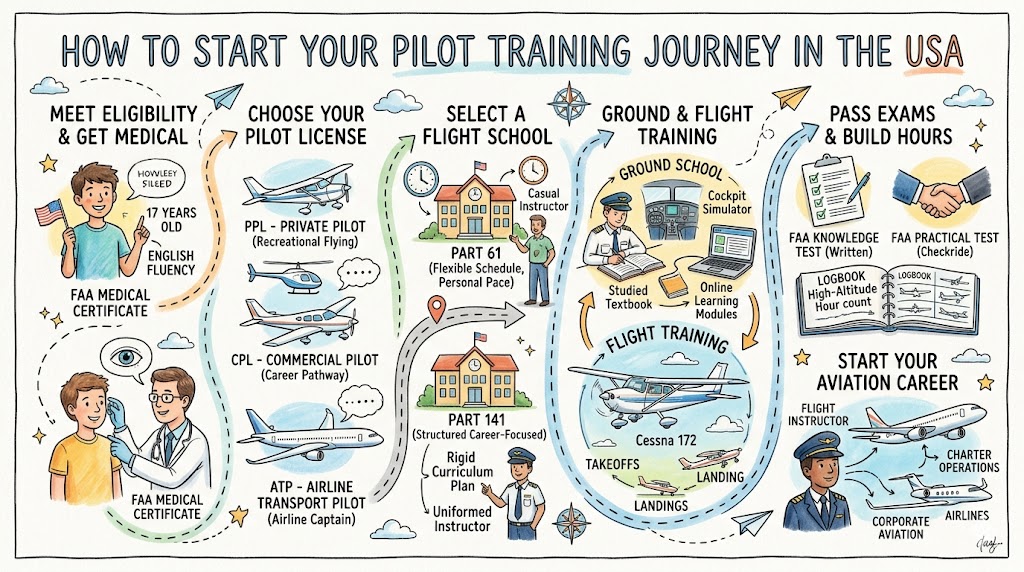
Step-by-Step Guide to Starting Pilot Training in the USA
1- Understand Your Pilot Training Goal
- Recreational flying or personal pilot license
- Commercial pilot or corporate aviation career
- Flight instruction or airline transport ambitions
- Charter flying or aerial survey opportunities
2- Learn the Basic Eligibility Requirements
- Minimum age: 16 for a student pilot, 17 for a private pilot license
- English proficiency
- High school diploma or equivalent
- FAA medical certification
- Commitment to training schedule and course requirements
3- Get an FAA Medical Certificate
- First-Class Medical: Required for Airline Transport Pilot
- Second-Class Medical: Required for Commercial Pilots
- Third-Class Medical: Required for Private Pilots
4- Choose Between Part 61 and Part 141 Flight Schools
| Factor | Part 61 Flight School | Part 141 Flight School | Best Fit |
|---|---|---|---|
| Training Structure | Flexible, personalized schedule | FAA-approved structured curriculum | Part 61 for flexible learners, Part 141 for career-focused pilots |
| Minimum Flight Hours | Higher minimum hours | Lower minimum hours due to structured program | Depends on time availability and goal |
| Cost Planning | May vary with pace | More predictable due to structured path | Budget-conscious or career-driven choices |
| Career Focus | General and recreational | Professional, airline-prep focused | Future airline or commercial pilots |
5- Select the Right Flight School
Consider:
- School reputation and FAA certification
- Instructor quality and experience
- Aircraft fleet size, type, and maintenance
- Airport environment and airspace
- Student reviews and success stories
- Safety culture and operational protocols
- Support services including housing, visas, and counseling
6- Start Ground School
Learn core aviation topics:
- FAA regulations and compliance
- Aerodynamics and aircraft systems
- Navigation and meteorology
- Radio communications and air traffic procedures
- Flight planning, safety, and emergency protocols
7- Begin Flight Training
- Hands-on flying with certified instructors
- Takeoffs, landings, and basic maneuvers
- Emergency procedures and abnormal situations
- Solo flights under supervision
- Cross-country navigation and instrument training
8- Pass Written, Oral, and Practical Exams
- FAA knowledge test covering aeronautics, navigation, and regulations
- Oral and practical flight test (checkride) with FAA Designated Pilot Examiner
- Thorough preparation ensures successful completion and certification
9- Build Flight Hours and Add Ratings
- Private Pilot License (PPL)
- Instrument Rating (IR)
- Commercial Pilot License (CPL)
- Multi-Engine Rating (ME)
- Certified Flight Instructor (CFI)
- Airline Transport Pilot (ATP)
10- Plan Your Aviation Career Path
- Airline pilot
- Corporate or charter pilot
- Flight instructor
- Cargo or aerial survey operations
- Recreational or private ownership flying
Pilot License Pathway Table
| Training Stage | Purpose | Typical Focus | Career Value |
|---|---|---|---|
| Student Pilot | Basic training authorization | Learn fundamentals, supervised flying | Step 1 for all pilot certifications |
| Private Pilot License | Recreational or personal flying | Solo flying, cross-country, navigation | Foundation for advanced ratings |
| Instrument Rating | Fly in low-visibility conditions | Navigation, instrument procedures | Enhances safety and flight versatility |
| Commercial Pilot License | Professional flying | Advanced maneuvers, multi-engine training | Required for paid flight operations |
| Multi-Engine Rating | Operate multi-engine aircraft | Engine-out procedures, performance | Career and charter opportunities |
| Certified Flight Instructor | Teach students | Instruction techniques, safety oversight | Builds flight hours for career advancement |
| Airline Transport Pilot | Airline captain eligibility | Advanced operations, high responsibility | Airline and corporate pilot careers |
Cost Factors in Pilot Training
- Aircraft rental and flight time fees
- Instructor fees
- Ground school tuition
- FAA exams and checkrides
- Study materials and simulator sessions
- Medical certification
- Insurance and school administrative fees
- Housing and living expenses
- Weather delays or additional training hours
Tips to Reduce Pilot Training Costs
- Train consistently to avoid repeated lessons
- Prepare thoroughly for each lesson
- Utilize simulators efficiently
- Choose schools in favorable weather regions
- Compare flight school pricing carefully
- Avoid long gaps between lessons
- Prepare for exams in advance
- Track progress with instructor guidance
- Set a realistic budget
- Explore financing, scholarships, or grants
Common Mistakes Student Pilots Should Avoid
- Selecting a flight school only based on price
- Ignoring instructor availability
- Overlooking medical certification requirements
- Training inconsistently or skipping lessons
- Underestimating total training costs
- Skipping ground school preparation
- Neglecting aircraft maintenance standards
- Ignoring local weather and airspace considerations
- Poor time management during training
- Not defining a clear license or career goal
Pilot Training Checklist for Beginners
- Define your flying goal
- Research flight schools and FAA approval
- Compare Part 61 and Part 141 options
- Verify eligibility and medical requirements
- Understand estimated training costs
- Visit or contact flight schools
- Review aircraft fleet and instructor availability
- Start ground school preparation
- Schedule a discovery flight if available
- Plan your training timeline
- Organize documents and certificates
Tips for International Students
- Understand visa requirements for student pilots
- Seek flight schools with international student support
- Prepare English communication skills for training and exams
- Plan housing and living arrangements near the school
- Manage training schedules considering travel and seasonal weather
- Budget carefully for tuition, flight time, and living expenses
- Confirm airport and TSA compliance for international arrivals
- Utilize student services for adjustment and support
Frequently Asked Questions
1. How do I start pilot training in the USA?
Start by defining your goal, choosing an FAA-approved flight school, obtaining a medical certificate, enrolling in ground school, and beginning flight lessons.
2. What is the first license I need to become a pilot?
Most students begin with a Student Pilot Certificate, which allows solo practice under supervision and is the first step toward a Private Pilot License.
3. How much does pilot training cost in the USA?
Costs vary depending on flight school, aircraft type, training hours, and location. A complete Private Pilot training program may range from $10,000–$15,000, with additional costs for advanced ratings.
4. What is the difference between Part 61 and Part 141 flight schools?
Part 61 schools offer flexible schedules and more personalized training. Part 141 schools follow an FAA-approved structured curriculum and may require fewer hours for certification.
5. Can international students do pilot training in the USA?
Yes, international students can enroll in FAA-certified schools, but they must comply with student visa regulations and meet English proficiency requirements.
6. What medical certificate do I need for pilot training?
Private pilots require a third-class medical certificate, commercial pilots require a second-class, and airline transport pilots require a first-class certificate.
7. How long does it take to become a commercial pilot?
Completion time depends on flight hours, ratings, school type, and personal schedule, typically 1–3 years for full training.
8. Is pilot training difficult for beginners?
Training requires focus, consistency, and dedication. Structured lessons, ground school preparation, and practice help beginners succeed efficiently.
9. How can I reduce the cost of flight training?
Train consistently, study before each lesson, utilize simulators effectively, choose schools wisely, and plan your schedule to avoid unnecessary delays.
10. What career options are available after pilot training?
Airline pilot, corporate or charter pilot, flight instructor, cargo operations, aerial survey, or recreational flying are common paths.
Conclusion
Starting your pilot training journey in the USA requires careful planning, clear goals, medical readiness, consistent study, and commitment. Choosing the right flight school, understanding licensing pathways, budgeting for training costs, and following a structured plan ensures a smooth and successful path to becoming a certified pilot. By preparing thoroughly, training consistently, and leveraging the resources available, aspiring pilots can achieve their aviation dreams safely, efficiently, and confidently.

