
Introduction
Embarking on pilot training is an exciting step toward a career in aviation, but it is also a significant commitment that requires careful preparation. Aspiring pilots must understand the academic, physical, financial, and practical expectations before enrolling in a flight school. Being well-informed helps students avoid surprises, ensures they meet the rigorous standards of aviation training, and sets the foundation for a successful career in the skies. Proper preparation allows students to focus on learning, mastering flight skills, and achieving their aviation goals efficiently.
Real-world Use Cases
Many students enter pilot training with enthusiasm but underestimate the challenges involved. For example, a student may expect training to be purely hands-on flying but quickly realize that theoretical knowledge in aerodynamics, navigation, meteorology, and aviation regulations is equally important. Others may struggle to meet physical or medical requirements or face unexpected costs without proper financial planning. Understanding these aspects before enrollment allows students to prepare mentally, academically, and financially, ensuring a smoother and more successful training experience.
Evaluation Criteria for Prospective Students
Students should assess their readiness based on factors such as age, medical fitness, educational background, financial resources, and career objectives. Evaluating flight school options, course structure, instructor experience, and aircraft availability is also crucial. A clear understanding of these criteria ensures that students select a program that aligns with their goals and maximizes their chances of successfully obtaining a pilot license.
Key Considerations Before Joining Pilot Training
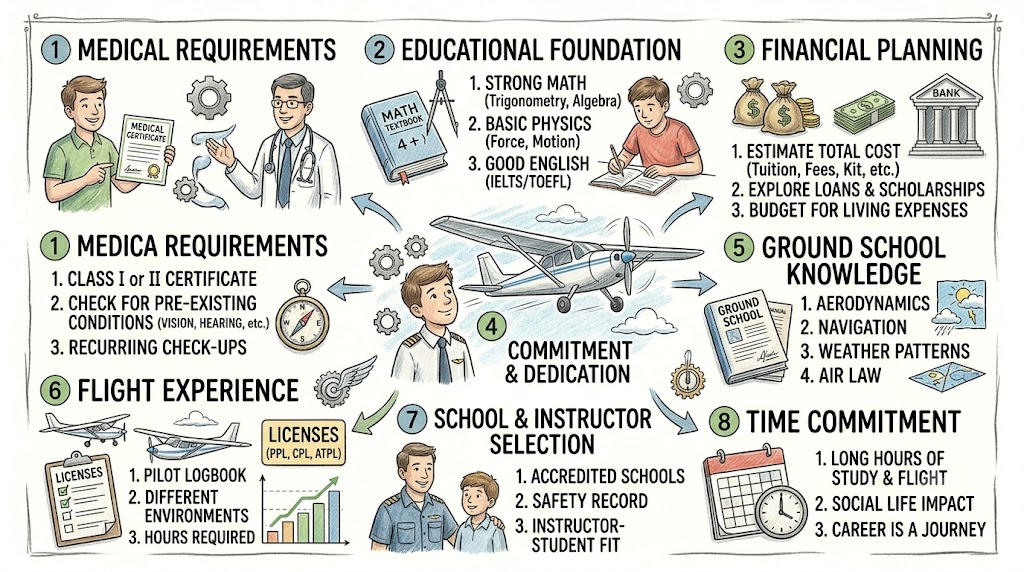
1- Medical and Physical Requirements
All pilots must meet specific medical standards to ensure safety during flight. Students should schedule a medical exam early to identify any limitations or required accommodations. Good vision, hearing, and overall health are essential for both private and commercial pilot training.
2- Financial Planning
Pilot training is a substantial investment. Costs include tuition, flight hours, materials, simulator time, exams, and licensing fees. Students should create a budget, explore scholarships, financing options, or part-time work, and plan for unexpected expenses.
3- Understanding Licensing Options
There are several pilot certifications, including Sport Pilot, Private Pilot, and Commercial Pilot licenses. Each has different training requirements, costs, and career implications. Students should choose a path aligned with their aviation goals.
4- Academic Preparation
Strong foundations in math, physics, and English comprehension are critical. Flight theory courses cover aerodynamics, meteorology, navigation, and aviation regulations, which require both study and practical application.
5- Time Commitment
Training schedules can be intensive, often requiring several hours per day, including flight lessons, ground school, and simulator practice. Students should assess their availability and ability to commit to consistent training.
6- Flight Simulator Experience
Simulators provide safe, cost-effective practice and allow students to master maneuvers before flying real aircraft. Familiarity with simulators can accelerate learning and improve confidence.
7- Career Prospects
Understanding the aviation job market, airline requirements, and regional differences in licensing helps students plan their career path. Networking, internships, and mentorships can provide valuable guidance and opportunities.
8- Choosing the Right Flight School
Factors include instructor experience, aircraft quality and availability, safety records, and student support services. Visiting schools, speaking with current students, and reviewing course curricula helps make an informed decision.
Comparison Notes
Private Pilot training is ideal for hobbyists or part-time flyers, whereas Commercial Pilot training prepares students for professional careers with higher standards, more flight hours, and additional certifications. Sport Pilot training offers the most accessible entry with fewer requirements but limits career opportunities. Understanding these differences ensures students choose the best path for their goals.
Practical Tips for Aspiring Pilots
- Start early with a medical exam and flight aptitude tests.
- Budget carefully, factoring in all costs and contingencies.
- Research flight schools thoroughly and visit campuses when possible.
- Build foundational knowledge in math, physics, and aviation theory.
- Leverage simulator training to accelerate practical skills.
- Set realistic expectations for time, effort, and progression.
FAQs
1- What age is required to start pilot training?
Most flight schools accept students from age 16 for a sport pilot and 17–18 for private pilot training.
2- Do I need a college degree to become a pilot?
A college degree is not always required for private or commercial pilot training, but it may benefit career prospects in commercial airlines.
3- How much does pilot training cost?
Costs vary widely depending on the license type, flight hours, and school, ranging from $10,000 for sport pilot training to over $80,000 for a full commercial pilot program.
4- Is flying physically demanding?
Yes. Pilots must maintain good health, coordination, and mental alertness. Medical exams ensure fitness to operate aircraft safely.
5- How long does pilot training take?
Training duration varies with license type and schedule. Sport Pilot licenses may take a few months, while Commercial Pilot licenses can take 1–2 years.
6- Can I work while training?
Yes, many students balance part-time work with training, but flight schedules may be intensive, requiring careful time management.
7- Do I need prior flight experience?
No. Most flight schools start with beginners, but aptitude and motivation are critical for success.
8- What exams are required?
Students must pass written, oral, and practical flight tests corresponding to the license type.
9- Are scholarships available for pilot training?
Yes. Many aviation organizations and schools offer scholarships or financial aid to eligible students.
10- What career paths are available after training?
Graduates can pursue careers as private pilots, commercial airline pilots, flight instructors, or aviation operations professionals.
Conclusion
Pilot training is a rewarding yet challenging journey that requires preparation, dedication, and informed decision-making. By understanding medical requirements, financial commitments, licensing options, academic preparation, and career prospects, students can approach flight school with confidence and realistic expectations. Choosing the right school, leveraging simulator training, and planning time and resources effectively ensures a smoother training experience and sets aspiring pilots on the path toward a successful aviation career.

