
Introduction
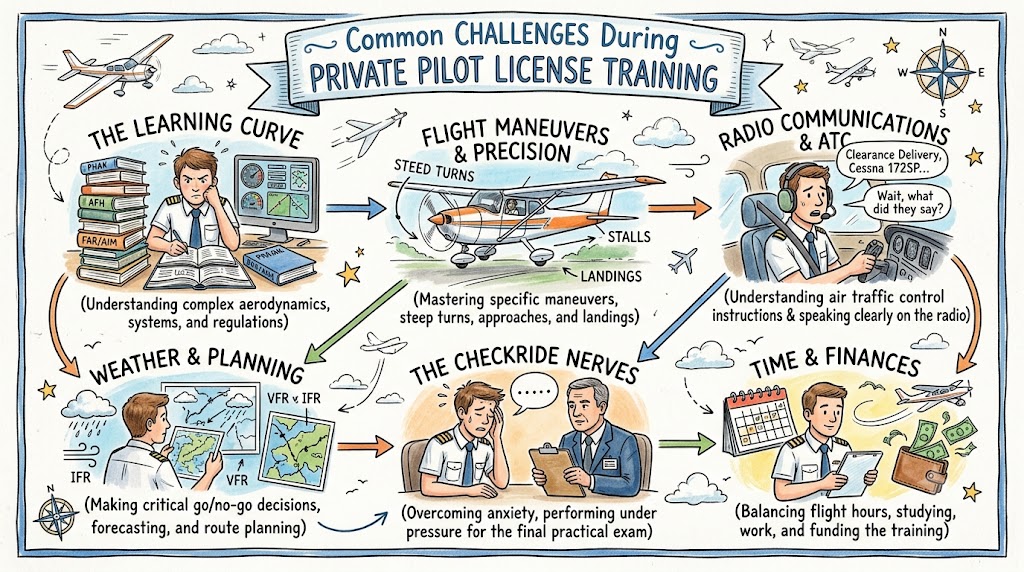
Private Pilot License (PPL) training is one of the most exciting steps for anyone entering aviation. It allows students to learn how to fly an aircraft, understand aviation theory, and eventually operate independently as a licensed pilot. However, the journey is not always easy. Most student pilots face a mix of technical, financial, and psychological challenges during their training.
These challenges are completely normal and part of the learning process. What matters most is how students recognize and overcome them. By understanding common difficulties early, aspiring pilots can prepare better, reduce stress, and improve their chances of successfully completing their license.
This guide explains the most common challenges during Private Pilot License training and how to overcome them effectively.
Real-world Use Cases
A beginner struggling with first flight confidence may feel overwhelmed during early takeoff and landing practice.
A student failing FAA written exam preparation often lacks structured study habits for aviation theory.
A trainee missing flight lessons due to scheduling issues experiences delays in skill development.
A learner struggling with radio communication finds it difficult to understand ATC instructions during flight.
A student overwhelmed by ground school theory struggles with subjects like navigation and weather.
A pilot nervous before solo flight faces anxiety despite being technically ready.
A student balancing job or studies with training finds it difficult to maintain consistency.
Evaluation Criteria for Overcoming Private Pilot Training Challenges
Students should evaluate their progress based on:
- Understanding of aviation theory
- Consistency in flight training
- Communication skills with ATC
- Confidence during flight operations
- Ability to handle weather conditions
- Logbook accuracy and progress tracking
- FAA exam preparation readiness
- Instructor feedback performance
- Decision-making under pressure
- Solo flight readiness level
- Time management skills
- Stress and anxiety control
These criteria help students measure improvement and identify weak areas.
Difficulty Understanding Aviation Theory
Many students struggle with subjects like weather, navigation, and aerodynamics.
For example, understanding wind patterns may feel confusing during early training.
Solution: Break theory into small daily study sessions and use visual learning tools.
Inconsistent Flight Training Schedules
Irregular flying slows down skill development.
For example, long gaps between lessons make it harder to remember procedures.
Solution: Maintain a consistent weekly training schedule.
High Training Costs and Financial Pressure
PPL training can be expensive for many students.
For example, unexpected additional flight hours increase overall cost.
Solution: Plan a clear budget before starting training.
Radio Communication Challenges with ATC
New students often struggle with aviation phraseology.
For example, misunderstanding instructions during approach can cause confusion.
Solution: Practice standard radio calls regularly.
Weather-Related Flight Delays
Weather conditions often affect training schedules.
For example, strong winds may cancel planned flight lessons.
Solution: Use delays as time for theory revision.
Aircraft Handling Difficulties
Early flying requires coordination and precision.
For example, maintaining stable altitude during turns can be challenging.
Solution: Focus on smooth and gradual control inputs.
Time Management Issues
Balancing training with work or studies is difficult.
For example, missed ground school sessions delay progress.
Solution: Create a fixed weekly study and flight plan.
Fear or Anxiety During First Solo Flight
Solo flying creates emotional pressure for students.
For example, nervousness may affect decision-making.
Solution: Build confidence through repeated instructor-guided practice.
Understanding Airspace Regulations
Airspace rules can be complex for beginners.
For example, entering restricted airspace unknowingly can be risky.
Solution: Study airspace charts regularly.
Maintaining Logbook Accuracy
Logbooks are essential for tracking progress.
For example, missing entries can delay certification eligibility.
Solution: Update logbooks after every flight.
Transition from Dual to Solo Flying
Switching from instructor-guided to solo flying is challenging.
For example, students may feel unsure without instructor support.
Solution: Practice decision-making during dual flights.
Decision-making Under Pressure
Pilots must make quick and safe decisions.
For example, unexpected weather changes require immediate action.
Solution: Train with simulated scenarios.
Pre-flight Inspection Learning Curve
Pre-flight checks are essential but complex for beginners.
For example, missing a small issue can affect flight safety.
Solution: Follow a detailed checklist every time.
FAA Written Exam Preparation
Many students struggle with theoretical exams.
For example, lack of structured study leads to poor results.
Solution: Use practice tests and study guides consistently.
Maintaining Motivation and Consistency
Training can feel long and demanding.
For example, slow progress may reduce motivation.
Solution: Set small goals and track improvements.
Instructor Communication Gaps
Miscommunication can slow learning.
For example, unclear feedback leads to repeated mistakes.
Solution: Ask questions and confirm instructions regularly.
Simulator vs Real Flight Transition
Students may perform differently in simulators and real aircraft.
For example, real wind conditions feel more challenging than simulation.
Solution: Use simulators as support, not replacement.
Confident vs Struggling Student
| Factor | Confident Student | Struggling Student |
|---|---|---|
| Progress Speed | Fast | Slow |
| Confidence | High | Low |
| Decision-making | Strong | Weak |
| Safety Awareness | High | Low |
Consistent vs Inconsistent Training
| Factor | Consistent Training | Inconsistent Training |
| Skill Retention | High | Low |
| Progress | Steady | Delayed |
| Confidence | Strong | Weak |
Strong vs Weak Theory Knowledge
| Factor | Strong Knowledge | Weak Knowledge |
| Exam Performance | High | Low |
| Flight Understanding | Clear | Confusing |
| Decision-making | Accurate | Uncertain |
Calm vs Panic Decision-making
| Factor | Calm Decisions | Panic Decisions |
| Safety | High | Low |
| Accuracy | High | Low |
| Flight Outcome | Stable | Risky |
Benefits of Overcoming Training Challenges
Overcoming challenges helps students:
- Improve flight safety
- Build strong aviation knowledge
- Increase confidence levels
- Reduce training delays
- Improve FAA exam performance
- Strengthen communication skills
- Enhance decision-making ability
- Improve solo flight readiness
- Reduce financial waste
- Ensure smoother certification success
Practical Tips for Students
- Follow a consistent training schedule
- Study ground school daily
- Practice radio communication
- Review instructor feedback
- Use checklists during flights
- Manage stress effectively
- Track progress in logbook
Common Mistakes to Avoid
- Skipping theory preparation
- Irregular flight lessons
- Poor communication with instructors
- Ignoring weather updates
- Not reviewing mistakes
- Rushing through training
FAQs
1. What are common PPL training challenges?
They include theory difficulty, weather delays, communication issues, and financial pressure.
2. How can I pass the FAA written exam?
Consistent study and practice tests are the best way to prepare.
3. Why do students feel flight anxiety?
It is normal due to responsibility and new flight experience.
4. Why is radio communication difficult?
Because aviation language and procedures are new to beginners.
5. How can I manage training costs?
Planning a budget and flying consistently helps control expenses.
6. How long does PPL training take?
It depends on consistency, weather, and student progress.
7. How does weather affect training?
Bad weather can delay flights and reduce practice time.
8. What is the biggest solo flight challenge?
Managing confidence and decision-making independently.
9. How can I improve instructor communication?
Ask questions and confirm instructions clearly.
10. What is the best tip for beginners?
Stay consistent, patient, and focused on safety.
Conclusion
Private Pilot License training is a rewarding but challenging journey for every student pilot. From theory struggles and weather delays to communication issues and solo flight anxiety, these challenges are part of becoming a skilled aviator. By understanding and addressing them early, students can build confidence, improve performance, and progress more smoothly toward certification. With discipline, consistency, and the right mindset, every challenge becomes a stepping stone toward becoming a safe and competent pilot.

