
Introduction
Becoming a commercial pilot is an exciting step toward a professional aviation career. Whether your goal is to fly for an airline, work in corporate aviation, operate charter flights, or become a flight instructor, success begins long before your first commercial flight lesson. Proper preparation helps students build confidence, develop strong learning habits, and make the most of every training opportunity.
Commercial pilot flight training is designed to develop advanced flying skills, sound decision-making, and professional aviation knowledge. It requires commitment, discipline, and a willingness to learn both in the classroom and in the cockpit. Students who prepare in advance often progress more efficiently and are better equipped to handle the challenges of professional flight training.
Understanding Commercial Pilot Flight Training
Commercial pilot flight training prepares students to operate aircraft professionally while developing the technical knowledge and practical skills expected of commercial pilots. Unlike recreational flying, commercial training focuses on precision, consistency, safety, and professional standards.
Training typically includes:
- Advanced aircraft handling
- Flight planning
- Aviation weather
- Navigation
- Aircraft systems
- Airspace procedures
- Emergency operations
- Risk management
- Aeronautical decision-making
The objective is not only to become a skilled pilot but also to develop the professionalism required for commercial aviation.
Why Preparation Matters
Preparing before flight training provides several advantages.
Students who begin training with realistic expectations and organized study habits often experience:
- Greater confidence
- Faster learning
- Better lesson retention
- Improved safety awareness
- More productive flight lessons
- Reduced training delays
Preparation also helps students manage the demands of balancing classroom instruction, flight lessons, and personal responsibilities.
Understand the Basic Eligibility Requirements
Before enrolling in commercial pilot flight training, prospective students should become familiar with the general eligibility requirements for commercial pilot certification.
Important considerations include:
- Meeting applicable age requirements
- Demonstrating English language proficiency
- Holding the required pilot certificates for commercial training
- Maintaining appropriate medical fitness
- Completing required documentation
Understanding these requirements early helps students plan their training more effectively.
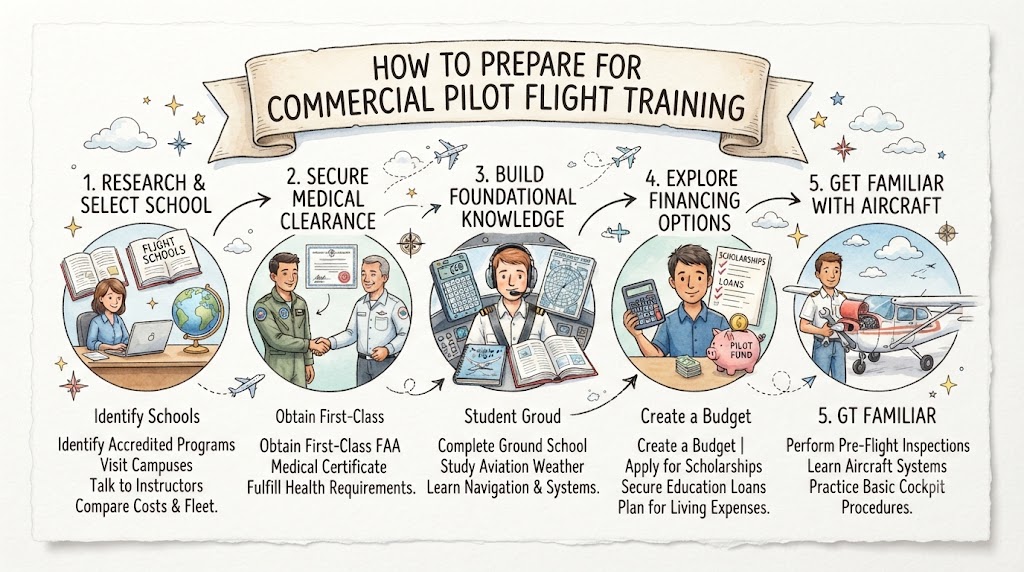
Obtain the Appropriate FAA Medical Certificate
Medical fitness plays an important role in professional aviation.
Scheduling a medical examination with an Aviation Medical Examiner (AME) before beginning commercial training allows students to identify and address any potential concerns early in the process.
Maintaining good physical and mental health throughout training supports safe flight operations and consistent progress.
Choose the Right Flight School
Selecting the right flight school is one of the most important decisions an aspiring commercial pilot will make.
When evaluating training programs, consider factors such as:
- Instructor experience
- Safety culture
- Aircraft maintenance standards
- Fleet availability
- Ground school quality
- Scheduling flexibility
- Student support
- Learning environment
A flight school that emphasizes safety, professionalism, and personalized instruction creates a strong foundation for long-term success.
Plan Your Training Budget
Commercial pilot training is a significant investment, making financial planning an important part of preparation.
Training expenses may include:
- Flight instruction
- Aircraft rental
- Ground school
- Aviation textbooks
- Flight equipment
- Medical examinations
- Knowledge test fees
- Practical test fees
- Flight simulator sessions
Creating a realistic budget helps students stay focused on training without unexpected financial interruptions.
Strengthen Your Ground School Knowledge
Strong aviation knowledge makes practical flight training much easier.
Students should become comfortable with topics such as:
- Aerodynamics
- Aircraft systems
- Aviation weather
- Navigation
- Airspace
- Federal aviation regulations
- Flight planning
- Weight and balance
- Aircraft performance
Ground school provides the theoretical knowledge that supports safe decision-making in the cockpit.
Develop Effective Study Habits
Commercial aviation requires continuous learning.
Successful students often:
- Review lessons daily
- Read aviation materials regularly
- Practice flight planning
- Study weather reports
- Complete practice quizzes
- Organize training notes
- Review instructor feedback
Consistent study habits improve confidence and reduce stress during examinations.
Improve Physical and Mental Readiness
Flying requires concentration, sound judgment, and effective decision-making.
Preparing yourself physically and mentally can improve both learning and flight performance.
Helpful habits include:
- Getting adequate sleep
- Eating balanced meals
- Staying hydrated
- Managing stress
- Maintaining physical fitness
- Organizing your daily schedule
Healthy routines help students remain focused during demanding training sessions.
Prepare for Flight Lessons
Arriving prepared for each lesson allows students to maximize learning opportunities.
Before every flight, review:
- Aircraft procedures
- Checklists
- Lesson objectives
- Weather conditions
- Airport information
- Emergency procedures
Preparation allows instructors to spend more time teaching advanced concepts rather than reviewing basic information.
Build Strong Professional Habits
Commercial pilots are expected to demonstrate professionalism during every flight.
Important habits include:
- Arriving on time
- Using checklists consistently
- Keeping an accurate logbook
- Asking thoughtful questions
- Accepting instructor feedback
- Communicating clearly
- Maintaining a positive attitude
These habits contribute to long-term success throughout an aviation career.
Understand the Importance of Flight Experience
Every flight lesson contributes to developing practical flying skills.
Students gradually improve:
- Aircraft control
- Navigation
- Radio communication
- Weather evaluation
- Decision-making
- Situational awareness
- Emergency preparedness
Rather than focusing only on accumulating flight time, students should aim to gain meaningful experience from every lesson.
Prepare for FAA Knowledge and Practical Tests
Commercial pilot training includes both knowledge evaluations and practical flight assessments.
Preparation strategies include:
- Following a structured study plan
- Completing practice examinations
- Reviewing instructor guidance
- Practicing commercial flight maneuvers
- Preparing for oral questioning
- Building confidence through repetition
Consistent preparation often produces better results than last-minute studying.
Essential Equipment Every Commercial Pilot Student Should Own
Quality equipment supports both learning and flight operations.
Recommended items include:
- Aviation headset
- Flight bag
- Pilot logbook
- Kneeboard
- Electronic flight planning tools
- Aviation charts
- Flashlight
- Backup batteries
- Notebook
- Aviation calculator or E6B flight computer
Investing in reliable equipment improves comfort and efficiency throughout training.
Common Mistakes New Commercial Pilot Students Make
Many students encounter similar challenges during training.
Common mistakes include:
Inconsistent Flying
Long breaks between lessons reduce skill retention.
Ignoring Ground School
Strong theoretical knowledge supports better practical flying.
Poor Time Management
Balancing work, study, and flight lessons requires careful planning.
Delaying Medical Certification
Completing the medical examination early helps prevent unnecessary training interruptions.
Avoiding Questions
Experienced instructors encourage students to ask questions whenever they need clarification.
Tips for Commercial Pilot Training Success
Students who perform well often share several habits.
Helpful strategies include:
- Fly regularly.
- Study every day.
- Review lessons after every flight.
- Practice chair flying.
- Use flight simulators when appropriate.
- Stay physically fit.
- Communicate openly with instructors.
- Set achievable goals.
Steady improvement over time leads to greater confidence and stronger flying skills.
Career Opportunities After Commercial Pilot Training
A commercial pilot certificate can open the door to many rewarding aviation careers.
Potential opportunities include:
- Airline Pilot
- Corporate Pilot
- Charter Pilot
- Flight Instructor
- Cargo Pilot
- Agricultural Aviation
- Air Ambulance Pilot
- Aerial Survey Pilot
- Government Aviation
- Sightseeing Operations
Many pilots continue building experience before advancing into larger commercial aviation roles.
Why Quality Flight Training Matters
Professional flight instruction provides students with the skills needed for safe and successful aviation careers.
A strong training program typically offers:
- Experienced instructors
- Well-maintained aircraft
- Structured learning
- Modern training resources
- Safety-focused operations
- Career guidance
- Ongoing student support
Choosing a quality training provider helps students build a strong foundation for future professional opportunities.
Commercial Pilot Readiness Checklist
Before Enrollment
- Research flight schools.
- Complete a medical examination.
- Plan your training budget.
- Set career goals.
- Organize study materials.
During Ground School
- Study consistently.
- Practice navigation.
- Learn aviation weather.
- Review regulations.
- Build strong theoretical knowledge.
During Flight Training
- Attend every lesson prepared.
- Practice regularly.
- Maintain your logbook.
- Ask questions.
- Review instructor feedback.
Before the Practical Test
- Complete mock evaluations.
- Review commercial maneuvers.
- Organize required documents.
- Build confidence through preparation.
- Stay well rested.
Frequently Asked Questions
1. How should I prepare before commercial pilot training?
Begin by researching flight schools, understanding certification requirements, organizing your finances, completing the appropriate medical examination, and developing strong study habits.
2. Is commercial pilot training difficult?
It is challenging, but with consistent study, regular flight lessons, and guidance from experienced instructors, students can successfully complete the program.
3. How important is ground school?
Ground school is essential because it provides the theoretical knowledge required for safe flight operations and professional decision-making.
4. What equipment should I buy first?
A quality aviation headset, flight bag, logbook, and essential study materials are among the most useful early investments.
5. Should I use a flight simulator?
Flight simulators can help reinforce procedures, navigation, and cockpit familiarity when used as part of a structured training program.
6. How can I improve faster?
Fly consistently, study regularly, review lessons after each flight, and actively seek instructor feedback.
7. How do I choose the right flight school?
Look for experienced instructors, a strong safety culture, well-maintained aircraft, flexible scheduling, and comprehensive student support.
8. What careers are available after commercial pilot training?
Commercial pilots may pursue opportunities in airlines, charter operations, corporate aviation, cargo services, flight instruction, aerial surveying, and other aviation sectors.
9. How important are professional habits during training?
Professional habits such as punctuality, preparation, communication, and disciplined checklist use are valuable throughout an aviation career.
10. What is the key to success in commercial flight training?
Preparation, consistent practice, continuous learning, and a strong commitment to safety are the foundations of long-term success.
Conclusion
Preparing for commercial pilot flight training is one of the most important steps toward building a successful aviation career. By understanding the training process, choosing the right flight school, developing effective study habits, maintaining physical and mental readiness, and approaching every lesson with professionalism, aspiring pilots can make the most of their training experience. Commercial aviation demands dedication, discipline, and continuous improvement, but with careful preparation and quality instruction, students can confidently work toward achieving their dream of becoming professional pilots.

