
Introduction
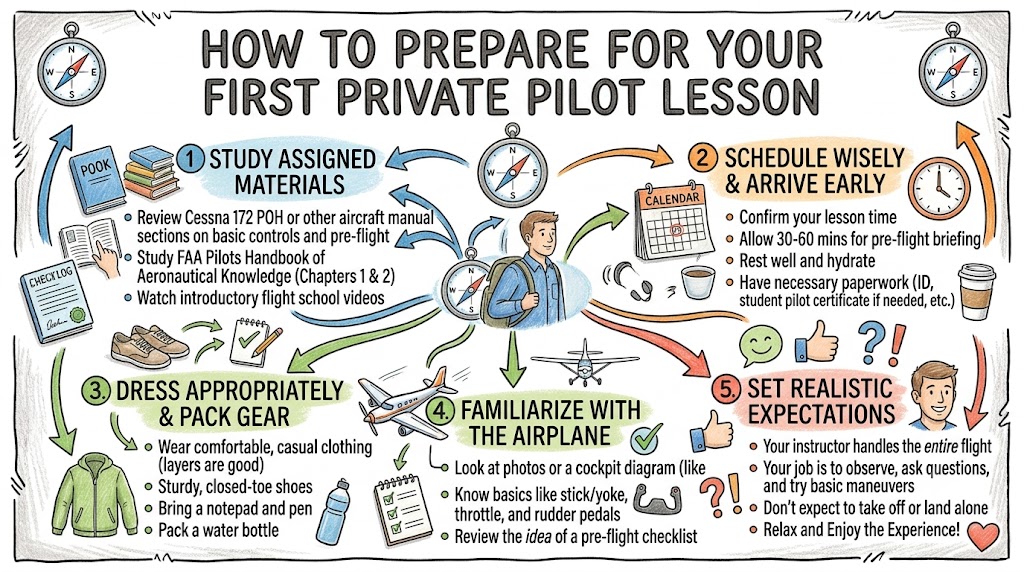
Your first private pilot lesson is the beginning of an exciting journey into aviation. For many aspiring pilots, stepping into a training aircraft for the first time is a memorable experience filled with curiosity, enthusiasm, and sometimes a little nervousness. While you are not expected to know everything before your first lesson, preparing in advance can make the experience smoother, more enjoyable, and more productive.
A little preparation helps you understand what to expect, communicate more effectively with your instructor, and focus on learning rather than worrying about the unknown. From learning basic aviation terminology to arriving well-rested and organized, every small step contributes to a positive start in flight training.
This guide explains how to prepare for your first private pilot lesson, what you should bring, what you will learn, and how to build confidence before taking your first flight.
Why Preparation Matters
Preparing before your first lesson allows you to focus on learning instead of dealing with avoidable distractions.
Good preparation helps you:
- Build confidence
- Reduce nervousness
- Understand lesson objectives
- Improve communication
- Learn more efficiently
- Develop safe aviation habits
Every experienced pilot began with a well-prepared first lesson.
Understand What Happens During Your First Lesson
Although every flight school follows its own training approach, most first lessons include similar activities.
You can generally expect:
- Meeting your flight instructor
- Completing a ground briefing
- Becoming familiar with the aircraft
- Learning basic safety procedures
- Observing a pre-flight inspection
- Sitting in the cockpit
- Participating in a short introductory flight
The first lesson is designed to introduce you to aviation rather than test your knowledge.
Meet Your Flight Instructor
Your instructor plays an important role throughout your training.
During your first meeting, you may discuss:
- Your aviation goals
- Previous flying experience
- Lesson expectations
- Safety procedures
- Training schedule
Building a comfortable relationship with your instructor encourages effective learning.
Learn Basic Aviation Terminology
Understanding a few common aviation terms before your lesson can make instruction easier to follow.
Helpful terms include:
- Cockpit
- Runway
- Taxiing
- Takeoff
- Landing
- Airspeed
- Altitude
- Flight controls
You do not need to memorize everything, but basic familiarity improves confidence.
Become Familiar with the Aircraft
Your instructor will introduce you to the training aircraft.
You may learn about:
- Wings
- Tail
- Engine
- Propeller
- Flight controls
- Landing gear
- Fuel system
- Cockpit layout
Understanding the aircraft helps you feel more comfortable before takeoff.
Learn About Basic Flight Controls
Students are usually introduced to the primary flight controls.
These include:
- Control yoke or control stick
- Rudder pedals
- Throttle
- Trim controls
Your instructor will explain how each control affects aircraft movement.
Prepare Your Documents
Before arriving, make sure you have any required paperwork ready.
Depending on the flight school, you may need:
- Government-issued identification
- Flight school registration forms
- Student information
- Medical documentation if applicable
Preparing documents early avoids unnecessary delays.
Dress Comfortably
Comfortable clothing helps you remain relaxed during the lesson.
Recommended items include:
- Comfortable shirt
- Comfortable trousers
- Closed-toe shoes
- Sunglasses
- Light jacket if needed
Avoid restrictive clothing that limits movement.
Bring Useful Items
A few simple items can improve your first training experience.
Consider bringing:
- Notebook
- Pen
- Water bottle
- Sunglasses
- Small flight bag if desired
Taking notes helps reinforce what you learn.
Get Enough Rest
Flying requires concentration.
Before your lesson:
- Get adequate sleep
- Stay hydrated
- Eat a light meal
- Avoid excessive fatigue
Being well-rested improves focus and learning.
Arrive Early
Plan to arrive before your scheduled lesson.
Arriving early allows time to:
- Meet your instructor
- Complete paperwork
- Relax
- Observe airport activity
- Prepare mentally
Rushing can increase unnecessary stress.
Develop the Right Mindset
Your first lesson is about learning, not perfection.
Approach training with these attitudes:
- Stay curious
- Ask questions
- Accept mistakes
- Learn patiently
- Focus on safety
Every lesson builds upon previous experience.
Listen Carefully to Your Instructor
Flight instructors provide valuable guidance throughout training.
Students should:
- Listen carefully
- Follow instructions
- Ask for clarification when needed
- Accept constructive feedback
- Review lessons afterward
Good communication accelerates learning.
Understand the Importance of Checklists
Checklists are an essential part of aviation safety.
You will likely become familiar with:
Pre-Flight Checklist
Verifying aircraft condition before flight.
Before-Start Checklist
Preparing the aircraft before engine start.
Taxi Checklist
Confirming aircraft readiness before moving on the ground.
Before-Takeoff Checklist
Ensuring all systems are ready for departure.
Landing Checklist
Preparing for a safe landing.
Post-Flight Checklist
Securing the aircraft after the lesson.
Developing checklist discipline early builds safe flying habits.
Learn the Basics of Pre-Flight Inspection
Before every flight, pilots inspect the aircraft carefully.
Typical inspection items include:
- Fuel quantity
- Oil level
- Tires
- Flight controls
- Propeller
- Lights
- Exterior condition
These inspections help identify visible issues before flight.
Expect to Participate During the Flight
Many students are surprised to discover they may handle the flight controls during their very first lesson under instructor supervision.
Activities may include:
- Maintaining straight-and-level flight
- Gentle turns
- Observing aircraft instruments
- Following instructor guidance
Your instructor will always remain in control when necessary.
Stay Calm During the Flight
Feeling excited or nervous is completely normal.
Helpful tips include:
- Breathe normally
- Listen carefully
- Focus on one task at a time
- Trust your instructor
- Enjoy the experience
Confidence develops gradually.
Common Mistakes First-Time Students Make
Many beginners experience similar challenges.
Common examples include:
- Arriving late
- Skipping preparation
- Feeling overwhelmed
- Being afraid to ask questions
- Rushing procedures
- Expecting perfection
- Ignoring instructor feedback
Recognizing these mistakes helps students learn more effectively.
Tips for a Successful First Lesson
Several simple habits improve the overall learning experience.
Stay Relaxed
Learning happens more naturally when students remain calm.
Observe Carefully
Watch both the instructor and aircraft instruments.
Ask Questions
Curiosity supports deeper understanding.
Take Notes
Review important points after the lesson.
Review What You Learned
Reflecting after every lesson strengthens long-term learning.
Continue Studying
Ground study supports practical flight training.
Benefits of Good Preparation
Preparing well provides many advantages.
Greater Confidence
Students feel more comfortable during training.
Better Learning
Preparation allows greater focus during lessons.
Reduced Stress
Knowing what to expect reduces anxiety.
Improved Safety
Prepared students develop safer aviation habits.
Strong Study Habits
Organization supports long-term success.
Positive First Experience
Preparation helps make the first lesson enjoyable and memorable.
First Private Pilot Lesson Checklist
Before Leaving Home:
- Bring identification
- Wear comfortable clothing
- Eat a light meal
- Stay hydrated
- Bring notebook and pen
At the Flight School:
- Meet your instructor
- Complete paperwork
- Observe the aircraft
- Ask questions
- Listen carefully
After the Lesson:
- Review notes
- Reflect on feedback
- Study lesson topics
- Prepare for the next lesson
Frequently Asked Questions
1. What happens during the first private pilot lesson?
Students usually meet the instructor, receive a ground briefing, inspect the aircraft, learn basic safety procedures, and participate in an introductory flight.
2. What should I wear?
Comfortable clothing, closed-toe shoes, sunglasses, and weather-appropriate layers are recommended.
3. What documents should I bring?
Bring government-issued identification and any flight school paperwork requested before your lesson.
4. How early should I arrive?
Arriving early allows time to complete paperwork, meet the instructor, and become familiar with the airport environment.
5. Will I fly the aircraft?
Many students are given the opportunity to operate the flight controls under the close supervision of their instructor.
6. Is it normal to feel nervous?
Yes. Nearly every student experiences some nervousness before the first lesson, and confidence grows with experience.
7. What should I study beforehand?
Learning basic aviation terminology, aircraft parts, and simple flight concepts can help you feel more prepared.
8. How long is the first lesson?
Lesson length varies by flight school but typically includes both ground instruction and flight time.
9. Can I ask questions during training?
Absolutely. Asking questions helps improve understanding and supports better learning.
10. How can I prepare for future lessons?
Review previous material, study consistently, arrive prepared, and maintain open communication with your instructor.
Conclusion
Preparing for your first private pilot lesson is one of the best ways to begin your aviation journey with confidence. While you are not expected to arrive with extensive knowledge, understanding what to expect, learning basic aviation terminology, organizing your documents, dressing comfortably, and approaching the lesson with a positive attitude can make a significant difference in your overall experience.
Every accomplished pilot started with a first lesson, and success comes from consistent learning, careful preparation, and a willingness to improve with every flight. By developing these habits from the beginning, you build a strong foundation for safe, enjoyable, and rewarding flight training.

