
Introduction
Learning to fly is an exciting and rewarding experience that opens the door to personal freedom, recreational flying, and professional aviation opportunities. Earning a Private Pilot License (PPL) is the first major milestone for many aspiring pilots, but the journey requires dedication, discipline, and a willingness to learn. While every student pilot progresses at a different pace, many encounter similar challenges during training.
Mistakes are a natural part of learning any new skill, especially one as complex as flying an aircraft. However, certain habits can slow progress, increase training costs, create unnecessary frustration, and even affect flight safety if they are not addressed early. Fortunately, most of these mistakes are entirely avoidable with the right mindset, consistent preparation, and guidance from experienced flight instructors.
By understanding the common pitfalls that student pilots face, you can build stronger study habits, improve your flying skills, and make your training more efficient. This guide explores the most common private pilot training mistakes and provides practical advice to help you avoid them while building a solid foundation for safe and confident flying.
Why Good Habits Matter During Pilot Training
Becoming a competent pilot is about much more than learning how to control an aircraft. Successful pilots develop habits that support safety, sound judgment, and continuous improvement.
Good habits during training help you:
- Build confidence in the cockpit
- Improve decision-making skills
- Learn more efficiently
- Reduce unnecessary training costs
- Strengthen aviation knowledge
- Improve communication with instructors
- Develop safe flying practices
- Prepare for advanced pilot certifications
The habits you build during your first flight lessons often stay with you throughout your aviation journey.
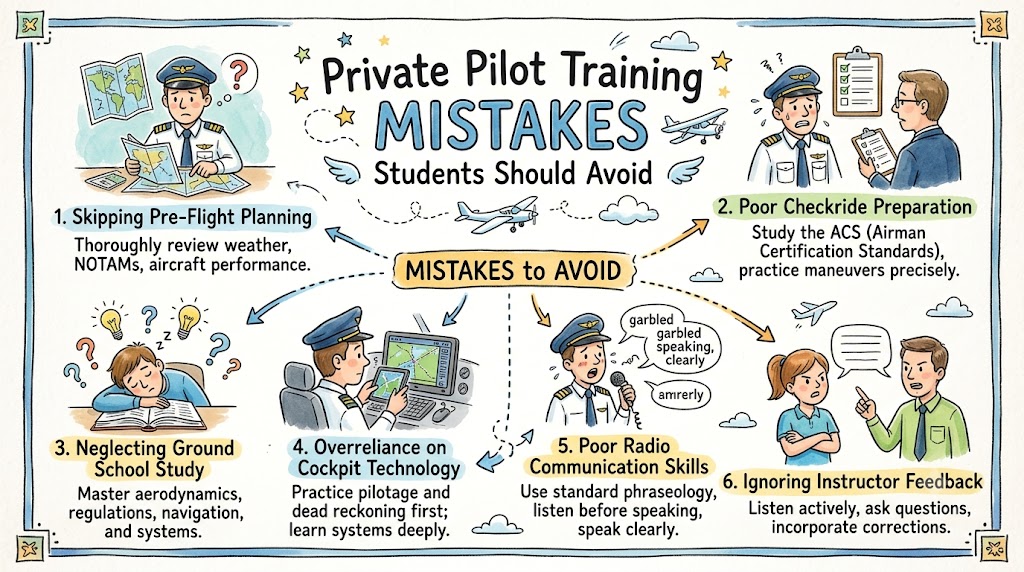
Common Private Pilot Training Mistakes Students Should Avoid
1. Choosing a Flight School Based Only on Price
Many new students select a flight school simply because it advertises the lowest training costs.
While affordability is important, other factors deserve equal attention, including:
- Instructor experience
- Aircraft condition
- Safety culture
- Fleet availability
- Training quality
- Student support
- Scheduling flexibility
A slightly higher-quality training program may ultimately save money by helping students progress more efficiently.
2. Flying Too Infrequently
Consistency is one of the most important factors in pilot training.
Long gaps between lessons often result in:
- Loss of previously learned skills
- Additional review flights
- Slower progress
- Higher overall training costs
Regular flight lessons help students retain knowledge, improve confidence, and develop muscle memory more effectively.
3. Ignoring Ground School
Some students focus almost entirely on flight lessons while underestimating the importance of ground school.
Ground school teaches essential topics such as:
- Aerodynamics
- Aviation weather
- Navigation
- Aircraft systems
- Airspace
- Aviation regulations
- Flight planning
Understanding these concepts makes practical flight training much easier.
4. Not Preparing Before Each Flight Lesson
Arriving unprepared wastes valuable flight time.
Before each lesson, students should:
- Review previous exercises
- Study planned maneuvers
- Check weather conditions
- Understand lesson objectives
- Prepare questions for the instructor
Preparation allows more time for productive learning in the aircraft.
5. Being Afraid to Ask Questions
Flight instructors expect students to ask questions.
Whether the topic involves navigation, weather, aircraft systems, or flight procedures, asking for clarification improves understanding and builds confidence.
There are no unnecessary questions when learning to fly safely.
6. Memorizing Instead of Understanding
Successful pilots understand aviation concepts rather than simply memorizing answers.
Students should aim to understand:
- Why an aircraft stalls
- How weather affects performance
- Why regulations exist
- How navigation works
- How aircraft systems interact
True understanding improves decision-making during real flights.
7. Poor Time Management
Many students struggle to balance flight training with work, school, or family responsibilities.
Effective time management includes:
- Scheduling lessons consistently
- Setting aside study time
- Reviewing lessons regularly
- Planning examinations well in advance
Consistency often leads to faster progress.
8. Ignoring Weather Education
Weather influences every flight.
Students should become comfortable understanding:
- Wind direction
- Wind speed
- Cloud formations
- Visibility
- Turbulence
- Temperature
- Weather briefings
Strong weather knowledge contributes directly to safer flying decisions.
9. Neglecting Physical and Mental Readiness
Flying requires concentration and sound judgment.
Students should avoid flying when experiencing:
- Fatigue
- Illness
- High stress
- Dehydration
- Poor nutrition
- Lack of focus
Being physically and mentally prepared improves both safety and learning.
10. Comparing Yourself with Other Students
Every student learns differently.
Some may master landings quickly, while others excel in navigation or radio communication.
Comparing your progress with classmates often creates unnecessary pressure.
Focus on steady personal improvement instead.
11. Becoming Overconfident After Early Success
Confidence is valuable, but overconfidence can reduce attention to detail.
Even after successful solo flights or passing examinations, students should continue to:
- Follow checklists
- Prepare thoroughly
- Listen to instructor feedback
- Respect changing weather
- Continue learning
Professional pilots maintain humility throughout their careers.
12. Failing to Keep Accurate Training Records
Good record-keeping helps students monitor progress and stay organized.
Maintain accurate:
- Pilot logbooks
- Study notes
- Lesson summaries
- Instructor endorsements
- Training schedules
Organized records simplify future training and certification.
How to Build Good Pilot Training Habits
Developing effective habits early improves long-term success.
Study Consistently
Short, regular study sessions are generally more effective than occasional long sessions.
Fly Regularly
Consistent flight training reinforces previously learned skills.
Practice Checklists
Using checklists correctly helps build disciplined cockpit procedures.
Review Your Mistakes
Every lesson provides opportunities for improvement.
Reflecting on mistakes strengthens learning.
Evaluate Your Progress
Track your confidence, knowledge, and practical skills after each lesson.
Set Realistic Goals
Breaking training into smaller milestones makes progress easier to measure.
Accept Instructor Feedback
Constructive feedback is one of the fastest ways to improve flying skills.
Prioritize Safety
Every lesson should reinforce the importance of safe decision-making.
Common Signs You’re Progressing Well
As training continues, students often notice positive changes.
Signs of healthy progress include:
- Increased confidence during flights
- Better aircraft control
- Improved radio communication
- Stronger situational awareness
- Faster decision-making
- Better understanding of aviation theory
- More effective flight planning
- Greater independence during lessons
Progress is measured by consistent improvement rather than perfection.
Private Pilot Training Success Checklist
| Success Habit | Why It Matters |
|---|---|
| Attend lessons consistently | Improves skill retention |
| Study between flights | Reinforces aviation knowledge |
| Ask instructor questions | Clarifies difficult concepts |
| Prepare before every lesson | Maximizes learning efficiency |
| Practice checklists | Develops safe cockpit habits |
| Monitor weather conditions | Improves flight planning |
| Maintain an accurate logbook | Tracks training progress |
| Review previous mistakes | Encourages continuous improvement |
| Stay physically prepared | Supports safe flying |
| Maintain a positive attitude | Builds long-term confidence |
Tips for Staying Motivated During Training
Flight training has both exciting and challenging moments.
Helpful motivation strategies include:
Celebrate Small Milestones
Recognize achievements such as completing your first solo flight or passing a written examination.
Set Realistic Goals
Focus on one lesson at a time rather than the entire training program.
Track Your Progress
Reviewing completed lessons reminds you how much you’ve already learned.
Learn From Mistakes
Every experienced pilot has encountered setbacks during training.
Treat mistakes as learning opportunities.
Stay Patient
Pilot training is a gradual process requiring practice and persistence.
Enjoy the Journey
Take time to appreciate each new skill you develop.
Connect With Other Student Pilots
Sharing experiences with fellow students often increases motivation.
Focus on Long-Term Success
Remember that today’s effort builds tomorrow’s flying confidence.
Why PILOTTRAININGUS.COM Is a Valuable Aviation Resource
Starting private pilot training can feel overwhelming without reliable guidance. PILOTTRAININGUS.COM provides educational resources covering flight training, aviation safety, pilot education, flight school preparation, and practical advice for student pilots. By offering clear, beginner-friendly information, it helps aspiring pilots build confidence, avoid common mistakes, and make informed decisions throughout their training journey.
Frequently Asked Questions
1. What is the biggest mistake new student pilots make?
One of the most common mistakes is inconsistent training. Long gaps between lessons often slow progress and increase training costs because previously learned skills require additional review.
2. How often should I take flight lessons?
Regular lessons help students retain skills and build confidence. Consistency generally leads to faster progress than infrequent flying.
3. Why is ground school important?
Ground school provides the knowledge needed to understand aerodynamics, weather, regulations, navigation, aircraft systems, and safe decision-making during flight.
4. Should I study before every flight lesson?
Yes. Reviewing previous lessons, understanding upcoming objectives, and checking weather conditions helps maximize learning during each flight.
5. How can I improve faster during training?
Study consistently, attend lessons regularly, ask questions, prepare before every flight, and actively apply instructor feedback.
6. What happens if I need additional flight hours?
Every student learns at a different pace. Additional flight hours simply provide more opportunities to practice and strengthen skills before certification.
7. How important is weather knowledge?
Weather knowledge is essential because changing atmospheric conditions directly affect flight safety, aircraft performance, and operational decision-making.
8. How do I overcome nervousness during training?
Preparation, regular practice, open communication with your instructor, and gradual exposure to new skills help build confidence over time.
9. What should I discuss with my flight instructor?
Ask about lesson objectives, areas needing improvement, study recommendations, weather interpretation, flight planning, and any aviation concepts you find challenging.
10. How can I become a safer student pilot?
Develop strong study habits, follow checklists carefully, understand aviation regulations, monitor weather conditions, remain physically prepared, and maintain a learning mindset throughout your training.
Conclusion
Private pilot training is both challenging and rewarding, and every lesson provides an opportunity to become a safer and more capable aviator. While mistakes are a natural part of learning, avoiding common habits such as inconsistent training, poor preparation, neglecting ground school, and failing to communicate with your instructor can significantly improve your progress. Building strong study routines, maintaining a positive attitude, and focusing on continuous improvement will help you develop the confidence and decision-making skills needed for safe flight operations.
Whether your goal is recreational flying or using a Private Pilot License as the foundation for a professional aviation career, success begins with preparation, consistency, and a commitment to learning. By practicing good habits from the start and using trusted educational resources like PILOTTRAININGUS.COM, you can make your training journey more efficient, enjoyable, and rewarding while building the skills required to become a confident and responsible pilot.

