
Becoming a commercial pilot is a dream for many aviation enthusiasts who want to transform their passion for flying into a professional career. However, becoming a successful pilot requires much more than simply learning how to operate an aircraft. It requires proper education, practical flight experience, strong decision-making skills, and choosing the right commercial pilot training program.
Selecting the right flight school is one of the most important decisions an aspiring pilot will make. The quality of training, instructor experience, aircraft condition, safety practices, and career support can directly impact a student’s future opportunities in aviation.
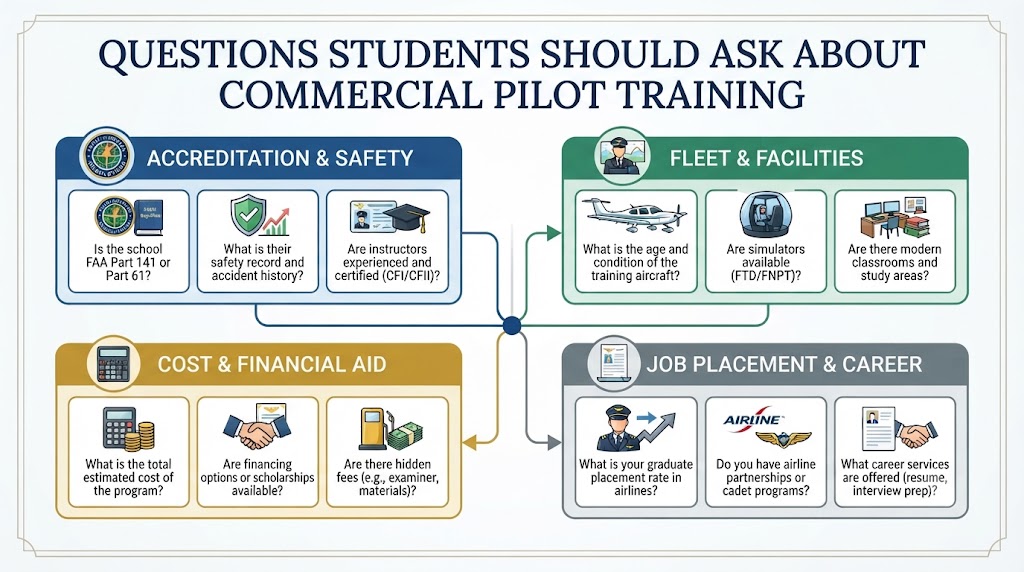
With many flight training schools and programs available, students should carefully evaluate their options before making a commitment. Asking the right questions helps future pilots understand what to expect and choose a training pathway that matches their career goals.
What Is Commercial Pilot Training?
Commercial pilot training is a structured aviation education program designed to prepare students for professional flying careers. It combines classroom learning with practical flight experience to develop the knowledge and skills required to operate aircraft safely.
A commercial pilot is trained to handle responsibilities such as:
- Aircraft operations
- Passenger safety
- Flight planning
- Navigation
- Weather assessment
- Emergency decision-making
- Aviation regulations
Commercial pilot training prepares students for careers in areas such as:
- Airline aviation
- Charter flight operations
- Corporate aviation
- Cargo transportation
- Flight instruction
A strong training foundation helps students build confidence and develop the skills required for a professional aviation career.
Why Choosing the Right Commercial Pilot Training Program Matters
The flight school and training environment a student chooses can significantly affect their learning experience.
A quality pilot training program helps students develop:
- Strong flying techniques
- Aviation discipline
- Safety awareness
- Professional confidence
- Technical knowledge
The wrong training choice may lead to challenges such as:
- Delayed certification
- Higher training costs
- Limited aircraft availability
- Poor learning experience
- Lack of career guidance
Before enrolling, students should research training providers and ask important questions to ensure they are making the right decision.
Essential Questions Students Should Ask Before Choosing Commercial Pilot Training
1. Is the Flight School Certified and Recognized?
The first question students should ask is whether the flight school is properly certified and recognized by aviation authorities.
A certified training institution follows approved standards related to:
- Flight instruction
- Aircraft maintenance
- Instructor qualifications
- Safety procedures
- Training quality
Students should research:
- School approvals
- Training reputation
- Safety records
- Student experiences
- Certification validity
Choosing a recognized aviation training academy provides confidence that the education received meets professional industry standards.
2. What Commercial Pilot Training Programs Are Available?
Every student has different aviation goals, so understanding available programs is important.
Common training pathways include:
Private Pilot License (PPL)
A PPL is usually the first step for many aviation students. It teaches basic aircraft handling, flight procedures, and aviation fundamentals.
Commercial Pilot License (CPL)
A CPL program prepares students for professional flying careers. It includes advanced flight training, navigation skills, and commercial aviation knowledge.
Instrument Rating
Instrument training helps pilots operate aircraft using flight instruments, especially in challenging weather conditions.
Multi-Engine Training
Multi-engine training provides experience operating aircraft with multiple engines, which is important for many commercial aviation roles.
Flight Instructor Training
Some pilots choose instructor training to gain experience and build flight hours.
Students should select programs based on their long-term career plans.
3. Who Are the Flight Instructors?
Flight instructors have a major impact on how students learn and develop as pilots.
An experienced instructor helps students:
- Understand aviation concepts
- Improve flying techniques
- Build confidence
- Develop safe decision-making habits
Students should ask:
- Are instructors certified?
- How much aviation experience do they have?
- What is their teaching approach?
- How do they support struggling students?
- How much individual attention is provided?
A skilled instructor can make the learning process more effective and enjoyable.
4. What Aircraft Will I Train On?
The aircraft used during training plays an important role in student development.
Students should evaluate:
- Aircraft condition
- Maintenance standards
- Aircraft availability
- Cockpit technology
- Training suitability
A well-maintained aircraft provides a safer and more reliable learning environment.
Students should ask whether the flight school regularly inspects and maintains its training fleet according to aviation standards.
5. What Is the Total Cost of Commercial Pilot Training?
Understanding the complete cost of pilot training is essential before starting.
Commercial pilot training expenses may include:
- Flight hours
- Instructor fees
- Ground school
- Aircraft rental
- Simulator sessions
- Study materials
- Medical examinations
- Written tests
- Licensing fees
Students should ask for a clear breakdown of all expected expenses.
A realistic budget helps avoid financial surprises during training.
While cost is important, students should also consider the overall value of the program, including instructor quality, aircraft access, safety standards, and career support.
6. How Long Does It Take to Complete Commercial Pilot Training?
The time required to complete training depends on several factors.
Important factors include:
- Training schedule
- Weather conditions
- Student progress
- Instructor availability
- Aircraft availability
- Flight frequency
Students who maintain regular training schedules usually progress faster because consistent practice improves flying skills.
Before enrolling, students should ask the school about the expected timeline and how they support students throughout the training process.
7. How Many Flight Hours Are Required?
Understanding flight hour requirements helps students prepare properly for certification.
Training usually includes:
- Instructor-led flights
- Solo flying
- Aircraft maneuvers
- Navigation exercises
- Cross-country flights
- Emergency procedures
However, completing the minimum required hours does not always mean a student is fully prepared.
Additional practice may help improve:
- Aircraft handling
- Decision-making
- Confidence
- Real-world flying skills
The goal should always be becoming a safe and capable pilot.
8. Does the Training Program Include Simulator Training?
Modern flight training often includes simulator-based learning to improve student preparation.
Flight simulators help students practice:
- Cockpit procedures
- Emergency situations
- Instrument operations
- Navigation techniques
- Decision-making scenarios
Simulator training provides a controlled environment where students can develop skills before applying them in real aircraft.
Students should ask whether simulator training is included and how it supports their overall learning process.
9. What Safety Standards Does the Flight School Follow?
Safety is the most important part of aviation training.
Students should understand how the flight school manages safety through:
- Aircraft inspections
- Maintenance procedures
- Weather monitoring
- Emergency training
- Instructor standards
A strong safety culture teaches students responsible aviation habits from the beginning.
A professional flight school should encourage safety-focused decision-making rather than focusing only on completing training quickly.
10. What Career Support Is Provided After Training?
Completing pilot training is only the beginning of an aviation career.
Students should ask whether the training provider offers career support such as:
- Airline interview preparation
- Resume guidance
- Aviation career counseling
- Job preparation
- Networking opportunities
Career support helps students understand how to transition from training into professional aviation roles.
Factors to Consider Before Choosing Commercial Pilot Training
| Factor | Why It Matters |
|---|---|
| Certification | Ensures recognized training quality |
| Instructor Experience | Improves learning and skill development |
| Aircraft Quality | Provides safe practical experience |
| Training Cost | Helps students plan financially |
| Safety Standards | Builds responsible flying habits |
| Career Support | Helps with future aviation opportunities |
Common Mistakes Students Make When Choosing Pilot Training
Choosing a School Only Based on Cost
A cheaper program may not always provide the best training experience. Students should consider quality, safety, and career support.
Not Researching Instructors
The instructor’s experience and teaching style can greatly affect learning progress.
Ignoring Aircraft Maintenance Quality
Training aircraft should be properly maintained and regularly inspected.
Not Understanding Complete Costs
Students should consider all expenses before beginning training.
Training Inconsistently
Long gaps between flights can slow skill development and increase training time.
Not Planning Career Goals
Students should understand how their training supports their future aviation plans.
Benefits of Choosing the Right Commercial Pilot Training Program
Strong Aviation Foundation
Quality training builds essential flying knowledge and technical skills.
Better Safety Awareness
Professional instruction helps students develop safe aviation habits.
Improved Career Opportunities
Proper training creates better opportunities in airlines and other aviation sectors.
Increased Confidence
A structured learning environment helps students become confident pilots.
Long-Term Aviation Growth
A strong foundation allows pilots to continue advanced training and career development.
How PilotTrainingUS.com Helps Future Pilots
Starting a professional aviation career requires reliable information and proper planning. Students need guidance to understand training requirements, certification pathways, and career opportunities.
PilotTrainingUS.com helps aspiring pilots explore important aspects of commercial pilot training and make informed decisions about their aviation journey.
By understanding flight school options, training expectations, and career requirements, students can choose a pathway that supports their goals of becoming professional pilots.
Frequently Asked Questions (FAQs)
1. What questions should students ask before joining commercial pilot training?
Students should ask about flight school certification, instructor experience, aircraft quality, training costs, safety standards, and career support.
2. How long does commercial pilot training take?
The duration depends on training frequency, weather conditions, aircraft availability, and student progress.
3. How much does pilot training cost?
Costs vary depending on flight hours, aircraft type, location, instructor fees, and certification requirements.
4. What qualifications are required to become a commercial pilot?
Requirements vary by aviation authority but generally include education qualifications, medical certification, flight training, and successful examinations.
5. Why is choosing the right flight school important?
The right flight school provides quality instruction, safe aircraft, structured training, and better career preparation.
6. Are flight simulators useful during pilot training?
Yes. Simulators help students practice procedures, improve decision-making, and prepare for real flight situations.
7. Can commercial pilot training lead to airline careers?
Yes. Commercial pilot training is an important step toward careers with airlines, charter companies, corporate aviation, and other aviation organizations.
Final Thoughts
Choosing the right commercial pilot training program is one of the most important steps toward becoming a professional pilot. The quality of education, instructors, aircraft, safety practices, and career support can influence a student’s entire aviation journey. Before enrolling, aspiring pilots should ask detailed questions and carefully evaluate their options. Proper research helps students avoid common mistakes and choose a training program that builds confidence, knowledge, and professional flying skills. With the right preparation and training environment, students can take the first step toward achieving their dream of becoming successful commercial pilots.

